Sunday, May 9, 2010

Mother's Day

This blog today will touch on gardening of any kind only superficially. Today is Mother's Day, as you probably know. I would like to take this time to truly THANK my mother for everything she has ever done for me. I can never, ever repay her!!
I was told once by somebody very wise, probably my mother, that the best way to repay your mother was to become the best you can be. I bet a mother came up with that old Army saying.
My mother instilled a great many things in me, probably even more so than most mothers. Why do I say that? My mother was a single parent after my father passed away when I was in 2nd grade. She IS the main reason I am what I am today.
I try everyday to be the best that I can be, in everything. Gardening is a major passion in both our lives. She was the driving force in this also.
Because of her instilling a love of gardening and nature in me, I became a Master Gardener, I work at the Nursery, became a member of the Charleston Hort Society and Coastal Carolina Camellia Society. I work very hard in my yard and have been hosting area plant swaps for the past 7 years.
My mother enjoys talking plants with me every week, she comes to my plant swaps and she enjoys visiting just to see my yard. Yea, I think she likes seeing me too.
My yard makes me proud and doing what I do best is my way of THANKING her.
Because of her, I can show off things like this:


Happy Mother's Day to all the Mothers out there. And a VERY SPECIAL Happy Mother's Day, Thank You and I Love You to my mother. You're the best!
Happy growing!
Darren

Saturday, May 8, 2010

Can I Cacti?

Cactus' or Cacti are probably one of the easiest plants to grow. They can take unbearable heat, think Arizona Desert in August. And to some extent, they can take some wicked cold.
This was my Cacti, out on my back steps during the Snow we had here in Charleston.


Sad huh?
Well, they stayed there all Winter. Took the Snow, well below freezing temperatures and everything else Mother Nature threw at them.
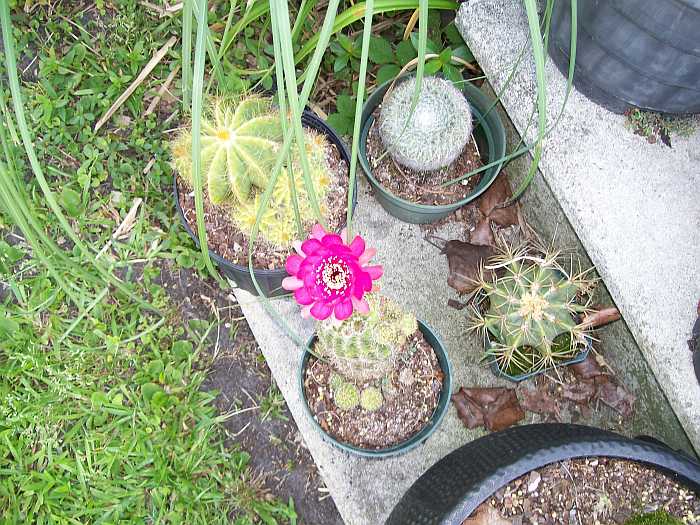
Look at them now!!


There are more that will be open in a couple of days. These things are tough! Just to remind you, I live in a Zone 8B, almost a 9.
The main trick to growing cacti is proper watering. Many cacti have been killed from overwatering during the winter. I will admit, I lost a couple due to this. There was a couple of weeks that we were getting anywhere from 1-3 inches of rain...EVERY OTHER DAY!
The Cactus family (Cactaceae) is one of the most striking, distinctive, diversified and specialized groups in the plant kingdom. It includes about 2,000 species.
The distinctiveness of the cactus family shows itself not only in the flower structure but also in one characteristic, that, although possessed by every cactus plant, is absent in all species of all other families. This is the spine cushion or areole. Whether or not spines are present, all cacti have areoles. Because these areoles differ in structure on different kinds of cacti, this is one way of distinguishing one cactus plant from another.
An areole is the radial arrangement of spines on pad-like buds where shoots and flowers may appear. The areoles themselves are arranged in a regular pattern, either along the ribs of columnar or barrel cacti, or at equally spaced intervals over the face of pad-like cacti.
One plant family that is often confused for the cactus family is the Euphorbia family (Euphorbiacea) which contains such plants as Cow's Horn Cactus (Euphorbia grandicornis), African Milk Bush (E. trigona) and Crown of Thorns (E. milii). While all these plants have spines, have green stems and few or no leaves, they do not have areoles. If you are still in doubt about whether you have a Euphorbia or a cactus, make a small cut in an inconspicuous place. If the sap is milky white and sticky, then you have a Euphorbia, since cactus sap is clear and watery.
Most cacti prefer a nutrient rich, rocky soil with good drainage. Pure sand will not work. There is actually soil under the sands of the desert. Just remember that cacti roots need a well draining, airy soil that will rewet easily.
Cacti need sun, and lots of it. I have not had any problem growing mine on those steps on the West side of my house. Like I mentioned at the beginning, mine take temperature extremes of 18 degrees as a low and probably 100+ as a high.
Cacti have practical uses as well as being fun to grow. The long, soft spines of Oerocereus celsianus are used as pillow and bed stuffing. Remind me not to go to a hotel using these pillows. Spines of other cacti are used as toothpicks, combs, sewing needles and fishhooks. Yet other cacti are used as building materials and as living fences or hedges.
If you are looking for a very easy plant to grow, consider Cacti. How many plants can you grow that, when you go away for a two week vacation, didn't even know you were gone!? They CAN be grown from seed very easily too. You can buy the seed at any of the big box stores for very little money. Patience is the key for this adventure however. There are many ways to start Cactus from seed. Do some research and see which method might fit into your lifestyle.
This picture is of one of my babies that is about 15 years old. I started it from seed, back when I lived in Maine!

Happy Growing!
Darren

Friday, May 7, 2010

One for the Geeks in us

This one comes from another one of my e-mail magazines. I was initially going to write about something else, but this one really spoke to my inner geek.
It comes from Greenhouse Grower.

Fake Ferns Exposed
DNA testing of garden ferns sold at plant nurseries in North Carolina, Texas, and California has found that plants marketed as American natives may actually be exotic species from other parts of the world.
The finding relied on a new technique called "DNA barcoding" that uses snippets of DNA to distinguish between species, in much the same way that a supermarket scanner uses the black lines in a barcode to identify cans of soup or boxes of cereal.
A team of North Carolina researchers suspected a fern sold in commercial nurseries might not be what the labels said it was, so they took a specimen to the lab to analyze its DNA. When they pasted the DNA sequence of three of the plant's genes into an online database, they discovered that what had been labeled as Wright’s lip fern (Cheilanthes wrightii), an American native popular in rock gardens and xeriscapes, was in fact a bristle cloak fern (C. distans), a distant relative from Australia.
“It was a 100 percent match,” says Eric Schuettpelz, a post-doctoral fellow at the National Evolutionary Synthesis Center (NESCent) in Durham. “Probably 50 percent of the plants I’ve collected from botanical gardens and greenhouses were incorrectly identified.”
“Nomenclature mix-ups in the nursery industry are frequent in all plants, ferns included,” says Tony Avent of Plant Delights Nursery in Raleigh, a retail nursery that sells plants from all over the world.
Most nurseries are run by growers and retailers – not taxonomists, Avent said. Ferns are difficult to monitor because they’re tricky to tell apart.
"Ferns don’t have flowers or fruits to help with identification, like many other plants,” says Kathleen Pryer, associate professor of biology at Duke University.
Fern species are particularly hard to contain in the close quarters of a greenhouse, where their spores can drift into neighboring pots.
“After a while, who’s to know whether a plant is what the label says it is?” Pryer says.
Most mix-ups happen when plants are passed from one grower to the next without good labeling, Avent said. “But some mix-ups occur when nurseries intentionally change the tags to sell a plant, especially when they have requests for a similar species or cultivar.”
“Most nurseries don’t have the time or interest to find the proper nomenclature,” Avent says. “They are more interested in making money, and in this economy, staying in business.”
Since DNA barcoding was first proposed in 2003, the technique has caught on more quickly in animals than plants. A standardized botanical barcode remains elusive partly because of the greater complexity of plant genetics, but also due to ongoing debate over which combination of genes will work reliably for the more than 400,000 species of land plants.
But for those in the business of buying and selling exotic plants, DNA barcoding could help identify harmful or invasive species or prevent the sale of species that are rare or endangered.
“This might eventually be able to help prevent people from taking things out of countries illegally,” Pryer says.
One of the advantages of the technique is that it can identify species from small amounts of tissue or processed material – a bit of leaf, a plank of wood or an herbal mix – that are otherwise impossible to match to the plants they came from, says Michael Windham, curator of vascular plants at the Duke Herbarium.
Some scientists foresee a future in which biologists, customs officials and port inspectors can feed a piece of leaf or root into a handheld DNA scanner, which will then sequence a handful of genetic markers and spit out the species name.
“Just like the tricorder device they used in Star Trek,” Windham says. “Spock used it to analyze the mineral content of rocks, or the oxygen content of the atmosphere. Who needs to lug around a copy of ‘Flora of North America’ when they’ve got a species tricorder?”

I can't wait to try playing with one of these. Beam me up Scotty!
Happy Growing!
Darren

Wednesday, May 5, 2010

Ranting Again

I subscribe to many different websites, magazines and blogs, from around the world on an array of gardening topics. In my e-mailbox today was an article from Growing Produce Magazine about a European Grapevine Moth that has been discovered in California. Unless this thing bought a ticket on a Delta Airlines flight, it was brought over here accidentally. I have ranted before on accidentally bringing invasive pests into a state or country. There are laws in place to hopefully stop this from happening, unfortunately, most of the time they are ignored.
Now, I am not by any means a Wine drinker, but I do love grapes. I have two varieties growing right now, with plans to add a few more. The last thing I want to see is an article like this cropping up.

(Courtesy of Growing Produce.com)
Feared Pest Found In Rich Fruit-Growing Area

The USDA’s Systematic Entomology Laboratory has confirmed the capture of two European grapevine moths (EGVM), Lobesia botrana, trapped on April 28, in two separate traps about ½ mile apart and placed in vineyards southeast of the city of Fresno. The discoveries come just months after the first find of the pest in the U.S. It was initially found in Napa County in late 2009.
These traps were part of a statewide program to detect the invasive moth, according to the Fresno County Department of Agriculture. As a result of the finds, additional traps were placed in an approximately 80 square-mile area around the discoveries by Fresno County and California Department of Food and Agriculture staff. An additional EGVM was found May 1, in the Kingsburg area, approximately 11 miles from the original find site.
County, state, and federal officials are developing an agriculture quarantine to prevent the human-aided movement of the moth. Treatment options for the EGVM include traditional and organic ovicides and larvicides as well as mating disruption. These activities are designed to give both domestic and foreign trading partners confidence that products moving in commerce are free of EGVM.
The Fresno County Department of Agriculture and the California Department of Food and Agriculture (CDFA) currently have over 5,000 EGVM traps in place throughout the county. Fresno County will continue to monitor traps in the county and in the quarantine area to determine the area where the pest is present.
Since the original September find in Napa County, EGVM has been found in Sonoma, Solano and Mendocino counties, where eradication efforts are on-going. While the Napa/Sonoma region is commonly known nationally as “Wine Country,” by far the bulk of the state’s wine grapes, and nearly all the table grapes, are grown in the San Joaquin Valley.
EGVM is a grape pest of economic importance in Europe, North Africa, the Middle East, southern Russia, Japan and recently Chile. The larva feed on grape flowers and developing fruit. Second and third generations cause the most damage by direct feeding on mature grape berries and indirectly by predisposing the crop to grey mold, a fungal infection caused by Botrytis cinerea. Damage is greatest in grape cultivars with compact clusters or sensitive to rot.

I am glad the authorities are on this. Who knows how much economic damage these moths could have caused if they were not discovered. Just to be fair, these could have been introduced to the states from a commercial shipment of something else that would not normally be examined for the moths. I have heard of Asian Citrus Psyllids being discovered in a shipment of Basil, so anything is possible. There is not much I can do about commercial shipments, However, I will plead my case again to the general public, please do not bring anything into this country from another country! The risk is just to great. If there is a plant that you feel you just can not live without, check online for it. There is a good chance that somebody in the states may sell it. They have been authorized to propagate it and there should not be any "Foreign" pests on it then. If you can't find something you are looking for, PLEASE contact me, I have many contacts out there and there is a good chance I know where you can get some.....LEGALLY!
Happy Growing!
Darren

Tuesday, May 4, 2010

To Contain or Not To Contain

Anybody that has been following my blog knows, I grow everything in containers. There are a number of reason why. Today, I thought I would give you the pros and cons to this practice. It will let you decide for yourself if this is what you want to do.
Let's start with some of the pros:
No space? No problem. Using containers gives you the flexibility of growing just about anything in a smaller space. If you live in an apartment, containers can be put on the balcony. You can even use a spare bedroom with all the shades open and supplemental lighting. There is some wiggle room as to the statement of, "Grow just about anything in a smaller space". I am pretty sure that a Coconut Palm will not do well in a container, it would have to be one heck of a huge pot! A Sequoia would also be hard pressed in one.
Movin' on up. If you suddenly have to move for whatever reason, they are much easier to put into the back of a truck and you don't have to dig. This is ONE of the main reasons why I container grow everything.....I rent, for the time being.
Harsh Winters? This is another one of the main reasons I containerize so much. Like to try your hand at Pineapples, Guava or some kind of Citrus, but live in Minnesota? You can grow things in the container and move them indoors during the Winter or when frost is coming. During Spring, Summer and Fall, they can come outside. I LOVE the exotic stuff!
Crappy Soil? In containers, you can buy or create the most perfect soil ever. Peat, sand, vermiculite, perlite, small pieces of pine bark, the list is endless as to what you can use to create the perfect soil for whatever you want to grow.
Good for people with disabilities or mobility problems. These are even better than raised beds. They can be placed around in such a fashion that wheelchairs can slide in between two pots and they can both be worked. You can also bring the containers right to the wheelchair.
Containers can be anything that will hold soil. Tires, Buckets, Kiddie Pools, Barrels, your imagination is the only limit here. You will want to make sure that it has drainage holes. I am using an old bathtub for my Asparagus. I have seen people use old tires for potatoes. They can also be as decorative as you like. Imagine the fun you can have with a toilet, sink and bathtub, overflowing with plants in your front yard? Better check with your HOA before doing this however.
Plant not happy? In a container, you can move it to a place it will be happy.
Tired of the scenery? Move things around. You can create an entire new look of your yard in literally minutes.
There is no real back breaking digging. Fill a container with soil and plant. No turf removal. No digging. No rocks. You will probably also have less of a weed problem.
Got Critters? Moles, Nematodes, and many other soil living critters are stopped by having it in a container. You can also have it closer to your house, on the patio for instance, and the Deer or Raccoons will be a little more hesitant to come chow down.

Here is what some of my Peppers, Tomatoes, Potatoes and Citrus growing in containers look like in April:


OKAY, that is the good side of it. Now for the down falls.
The cons:
Watering. Depending on the type of plant, soil medium used and your weather conditions, you are going to have to water much more often. Quite possibly everyday. Cactus will require much less watering, even in the Summer, than Tomatoes. A hot, windy day will dry out your plants faster than an overcast, calm day.
The Heat! If you use a black pot and put it in full sun, which most plants need, the rootzone can easily reach 120 degrees! That will cook those poor little roots. You can shade the pot with a smaller, low growing plant. Clustering the pots together. You can also paint your container with white, plastic paint. A light colored pot will work also.
The Umbrella effect. Let's say you have gotten 2 inches of rain. No need to water, right? You go out and your tomato plants are all droopy. After you stick your finger into the soil, you discover it is dry as a bone! What gives?! The plant acted as an umbrella. All that wonderful rain basically was directed out and away from the soil. You can either live with this, and water more often, or use a much bigger pot than the plant is wide.
Weight. I said up above that you can move the plants in and out, depending on the weather. A fifteen gallon container full of plant and soil is not light. Use non-biodegradable styrofoam packing peanuts or pieces of styrofoam in the bottom to reduce weight. It will also aid in the drainage and keep them out of the local landfill. Be careful not to lighten it up too much, a tall, top heavy plant will blow over easily in a strong wind.
Feed Me. Nitrogen, probably the most important nutrient a plant needs and the first number on a fertilizer package. Unfortunately, it leaches out of containers the fastest. You will need to fertilize more often. I recommend either, every two weeks or using a solution of 1/4 to 1/2 strength every other time you water.
Well, that gives you an idea of the pros and cons of container gardening. I feel that the pros outweigh the cons, but you may feel differently. I wanted to present the case your honor and let you be the judge. After all, it is YOUR yard!
Happy Growing!
Darren

Sunday, May 2, 2010

The TEST

One thing that all gardeners have in common is, the battle with insects. Your plants are doing great one day, then the next they have holes in the leaves, bites taken out of the fruit, or little critters just running all over them. What do most gardeners do? They reach for the insecticide and spray away. Now the question is, did you really need to spray? Was it a good bug or a bad bug? I understand that most gardeners know what an Aphid looks like or even a Mealybug. I am also pretty sure they know what a Ladybug looks like. What about a Ladybug larvae? Ever see anything like this on your plants?


These are all good guys and should not be sprayed.
I did a lecture back in March on Good Bugs, Bad Bugs and was surprised at the responses I got. I thought today would be a good day to repeat that experiment. I am going to show you a bunch of pictures of Good Bugs and Bad Bugs. Be honest with yourself, don't look to see what it is before you make a guess. There is not going to be any grades, and nobody else will know how you really did. It could, in the end, help your garden grow.

Let's get started:

GOOD BUG or BAD BUG?


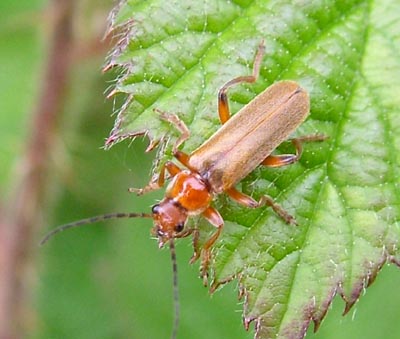
GOOD...Red Soldier Beetle.... The larvae are carnivorous, feeding on insects in the soil. The adults are also predators, eating caterpillars, eggs, aphids, and other soft-bodied insects. Soldier beetles resemble lightning bugs but do not have light-producing organs.

GOOD BUG or BAD BUG?


BAD....Common Asparagus Beetle......Both the larvae and the adults of the Common Asparagus Beetle damage Asparagus plants. The overwintered adults emerge and begin to feed on the tender growing tips of the newly sprouted Asparagus.

GOOD BUG or BAD BUG?


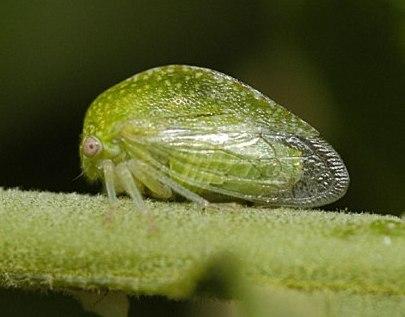
BAD....Buffalo Treehopper....Both nymphs and adults suck sap for food. Plants include Willows, Elms, Cherry, Black Locust, Goldenrods, Asters as well as others.

How you doing so far?

GOOD BUG or BAD BUG?


GOOD.....Horned Assassin Bug.....This bug kills many garden pests including flies, mosquitoes, beetles and large caterpillars.

GOOD BUG or BAD BUG?


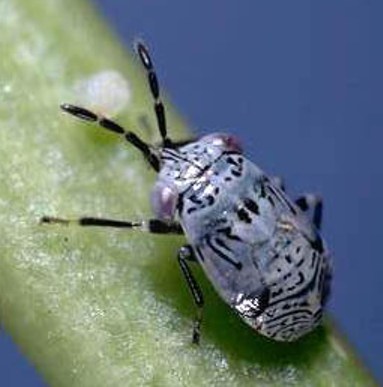
GOOD....Big Eyed Bug.....They are regarded as beneficial because they prey upon numerous kinds of insect and mite pests of turf, ornamental and agricultural crops.

One more.
GOOD BUG or BAD BUG?


BOTH....Earwig.....Earwigs are omnivorous, and will feed on dead plant material and dead or slow invertebrates. However, in large numbers, may feed on tender plants and may damage Lettuce, Strawberries, Dahlias, Marigolds, Zinnias and Roses. There are 22 types of Earwigs in the United States.
I hope this little test has given you an idea of the types of insects that there are in your garden. There is an estimated 900 thousand to over one million species of insects in the world, with more being discovered every year. There is a very handy item out there that you can get to help with some of the identifications. Do a Google search for "Mac's Field Guide of Insects". I use mine all the time. They are not very expensive. Besides, wouldn't it be a good idea to learn a little bit about the insects in your little corner of the world? Or at least be able to tell the difference between the good guys and the bad guys? I'm just sayin'!
Happy Growing!
Darren
Saturday, May 1, 2010

Not Even Kissing Cousins

As the Citrus Guy, I get the question about Loquats (Eriobotrya japonica) being related to Kumquats (Fortunella spp.). The answer is No, they are not even kissing cousins. This is an understandable question, would you want to have "QUAT" in your name?
They ARE both native to China, but the Loquat is indigenous to southeastern China and possibly southern Japan. It is said to have been cultivated in Japan for over 1,000 years.
The Loquat was first learned about in the Western World by a botanist named Engelbert Kaempfer in the year 1690. It was planted in Paris in 1784 and in England in 1787. It spread from there all over the world.
The Loquat can reach a height of 20 to 30 ft. The evergreen leaves, are 5 to 12 inches long and 3 to 4 inches wide. The flowers have a very sweet fragrance, they are white, with 5 petals. Matter of fact, the flowers smell so good that, in the 1950's, the flowers attracted the interest of the perfume industry in France and Spain and some experimental work was done in extraction of the essential oil from the flowers and leaves. The product was appealing but the yield was very small.
The fruits are born in clusters of 4 to 30. They can be oval, rounded or pear-shaped, 1 to 2 inches long. They kind of resemble an apricot in size and color. The flesh is pale yellow and is suppose to have a sweet tart cherry like or pear like flavor. There may be 1 to 10 seeds, but usually only 3-5.
Once the tree is established, it can tolerate down to 12 degrees. The flower bud can be killed at 19 degrees, the mature flower at 26 degrees. This is important to know because Loquats are one of the first fruits to ripen in the Spring. They bloom in the Fall, needing 90 days from full flower opening to reach maturity. Basically it takes all Winter to form the fruit.
The tree grows well on a variety of soils of moderate fertility, but needs good drainage.
You can grow Loquats from seed, they are usually not very good though. Cuttings and grafting are the best methods of propagation. Started this way, you should see fruit within 5 years.
There are some cultivars that can produce 100 pounds of fruit per tree at 5 years of age. When they get to be 15 to 20 years old, they can produce in excess of 300 pounds. Loquats generally will keep for 10 days at room temperature, and for about 60 days in cool storage. There are said to be 800 varieties of Loquats, of which only about 46 are considered important or usable.
There are a bunch of pests and diseases that can affect your tree. Scale insects, aphids, fruit flies, birds, and a few other insects damage the fruit. Pear blight is probably the most serious disease. Good sanitation will take care of many of the disease problems. Watching for the first sign of an infestation with a good spray program, (remember to always follow labels directions) will take care of the insects. Netting for the birds.
There are many uses for the Loquat fruit. Some people prepare spiced Loquats (with cloves, cinnamon, lemon and vinegar) in glass jars. They can be used to make Jams, Pie Filling or peeled, seeded and eaten fresh. The fruits are high in Vitamin A, Dietary Fiber, Vitamins B6, B17, C, and Potassium.
I am excited about the prospects of trying a Loquat fruit. My tree, for the first time, has actually fruited and will soon be ripe. This amazed me because of the really nasty Winter we had. Check out the fruit:


This was one of the clusters, there are probably a total of two dozen fruit on the entire tree. I will let you know how they taste!

Happy Growing!
Darren