Showing posts with label Citrus. Show all posts

Sunday, July 7, 2019

Not Mealy Mouthed about Mealy Bugs


I had an article come across my email a couple of days ago that, unfortunately, seems to becoming a more common occurrence.

A new plant pest has been found in Florida attacking Citrus trees and fruit. It is the Lebbeck Mealybug (Nipaecoccus viridis) a.k.a. the Spherical Mealybug. The original article can be found HERE

Lebbeck Mealybug (Nipaecoccus viridis) a.k.a. the Spherical Mealybug
Image courtesy of http://www.idtools.org/id/scales/factsheet.php?name=6983

The article goes on to say that the Lebbeck mealybug is approximately 4 millimeters (mm) long by 3 mm wide with body color black, purple to blue-green and covered by thick white, creamy, or pale yellow wax. Females produce an ovisac with a wax that is sticky when touched. In high densities, waxy secretions may appear as a continuous layer of wax, which will obscure individual mealybugs. Wax may turn yellow in older infestations. Specimens do turn black in 70% alcohol. This might be a good, quick field diagnostic, but species confirmation will require slide mounting.

I put those last few words in bold to bring me to the point of today's article. Yes, the last thing the Florida Citrus industry needed was another insect. My question is, how good do you have to be to tell the difference between one mealy bug and another?

If I had seen the above picture or the one in the article, I would have just assumed it was one of the ordinary mealies. I know I am not an Entomologist, and I knew there were a few different species, but just how many of them are there!?

So, I dug a little deeper.
While I could not find a total number of species in the world, there are over 170 species of mealybugs that occur in California alone!
And I also found this.


While adult females are wingless, which are the oval blobs in the above picture, the adult male mealybugs, which are rarely seen, are tiny two-winged insects with two long tail filaments. Personally, I had never even SEEN a male mealybug before this picture.

Many mealybug species can reproduce asexually without mating. The big fancy word for this is through a process called parthenogenesis. In this type of asexual reproduction, the female can generate an embryo without the help of a male's sperm. (Insert your own joke here)

Depending on the species and the environment, mealybugs may have anywhere from two to six generations a year. Where climates are warm or plants are growing indoors, such as a greenhouse, all stages may be present throughout the year.

Many types of perennial plants are affected by mealybugs. Among the fruit trees, citrus has the most problems, but mealybugs may sometimes be found on stone fruits such as peaches. I can tell you, I know full well that they like citrus fruit.

  I found this in the navel of my Cara Cara Orange once. 
Citrus mealybug -Planococcus citri

Mealies are piercing/sucking insects that suck the juices from a plant, reducing the plant's vigor. 

Many natural enemies feed on and kill mealybugs on fruit trees and woody ornamental plants in the landscape. These beneficial insects generally can be relied upon to keep numbers at tolerable levels. Natural enemies include a number of species of parasitic wasps that lay their eggs in or on developing mealybugs. Other naturally occurring predators of mealybugs include lady beetles (Lady Bugs), green and brown lacewings, spiders, minute pirate bugs, and larvae of predaceous midges.

If the natural predators are not controlling them well enough, then Insecticidal Soap is a good alternative. If you are not familiar with that product, Insecticidal soap is based on potassium fatty acids and is used to control many soft-bodied plant pests. Because insecticidal soap works on only direct contact with the pests, you must spray them directly for it to work. It literally dries them out to death. You can also use horticultural oil, or neem oil insecticides applied directly on them.

 The mealybugs’ waxy coating may repel most contact insecticides, and their habit of aggregating in hidden locations makes them hard to reach, so using a combination of predators and insecticides is a good idea. No, the soap does not harm most of the good bugs, just try not to spray them if you can.

A word of caution here, there are MANY, MANY homemade recipes on the Internet to make your own Insecticidal Soap. Most of them use some kind of dish soap. Read your labels carefully, if there is any kind of grease cutter in the soap, it could do more harm to the plant than the pest would have.

Mealybugs have a symbiotic relationship with ants because the ants protect them from predators and parasites. They also herd them around to different parts of the plant to "spread the wealth" as it were. 

You can find these pests on a wide range of plants, the most serious ones are that which feed on citrus; as mentioned earlier, other species damage sugarcane, grapes, pineapple, coffee trees, cassava, ferns, cacti, gardenias, papaya, mulberry, sunflower, and orchids as well as many other plants.

The good news is, you can limit their introduction into your home and garden. Mealybugs are often introduced into landscapes (and especially into indoor areas) on new plants or on tools or pots. Because adult females can’t fly and can’t crawl very fast, they don’t rapidly disperse in the garden on their own. Inspect any new plants thoroughly for mealybugs before bringing them home.

Hopefully, this has opened your eyes more to the world of mealybugs and for the fact that quarantines are in place for a reason. That Lebbeck Mealybug did not buy a ticket on its own and move to Florida, it was on something that either should NOT have been introduced into the area, or somebody didn't inspect a plant very well.

Either way, let's hope that this is an isolated incident and more will not be found.

If you have any questions about this or any of my other writings, please feel free to comment below or send me an email to TheCitrusGuy@netzero.com

You can also follow me on FACEBOOK
Or check out my WEBSITE

Happy Growing!
Darren

Growing Citrus Video

It has been said that a picture is worth a thousand words and a video is worth a million!

The idea of writing a blog, writing articles for magazines/websites. and books are definitely worthy of anybody's time, especially if they have something important to say. Information is power and the more you have the better you are at anything.

I have written many articles on growing citrus over the years and it has helped lots of folks get their trees back into shape and producing again.

Well, today, I am going one step farther in my advancement to educate on citrus growing.


My lectures are always well attended. When I announce on social media that I will be speaking somewhere, inevitably, there are folks that will contact me and tell me they wish they could come but are working, they will be out of town, or just can't make it for whatever reason.

Will you be recording it?
That is a common question after the above statements.
My typical answer was, no, sorry, I don't have the ability to do that.

Well, times are a changing!

Through a chance encounter, some time investment, and the stars aligning themselves just right, I can now say, YES, I have one of my growing citrus lectures available online as a video.

I tried to keep the cost as reasonable as possible at $14.99
It runs 72 minutes and you will be able to see all of my Powerpoint slides plus hear my narration.
This was filmed in front of a live audience as well as remote audiences in different parts of the country. So there were some questions asked during the talk that I answered.

If you have ever wanted to hear me speak but lived too far away, were not able to get to one when I was in your neighborhood, or just like listening to things in the comfort of your own home, here is your chance!

Follow this LINK
The trailer link will give you the first three minutes for free, so you can decide whether the format is right for you.
If you have ANY questions that were either not answered during the presentation or you have a slightly different problem, PLEASE, feel free to contact me!

My e-mail address is TheCitrusGuy@netzero.com
You can follow me on FACEBOOK
Or get all kinds of other information on my WEBSITE

I look forward to hearing from you, if you need help, have a comment (good or bad) about the video, or any questions in general about horticulture, you know how to get a hold of me!

Happy Growing!
Darren

Sunday, January 7, 2018

Citrus Freeze Damage and What you Should or Should Not do

     The start of 2018 has been anything but happy here in the Southeast. January 3rd we started with freezing rain, ending with snow. In some places of the Lowcountry, up to 7 inches of the white stuff fell. As of today, January 7th, there are still roads covered in ice, inches of snow on the ground, and business' closed. The good news is, tomorrow, Monday, we are in for a real warm spell and by the end of the week be at 70 degrees.
     I have received many e-mails, phone calls, and messages on Facebook asking if the citrus trees are going to be okay here in Charleston? The best answer I can give them, maybe. Some of it depends on whether the cold weather we had prior to this long cold/snow spell was enough to get them to go into their semi-dormancy. Another factor will be if the tree was healthy going into all of this.
     Here is a list of what to possibly expect, what is happening, and what you should and shouldn't do.


     Freeze damage on citrus trees occurs when the water inside the fruit, leaves, twigs, and wood
of a tree freezes rupturing the cell membranes. Unlike deciduous trees which protect
themselves from the cold by shedding their leaves in the fall and entering a dormant state,
citrus trees continue growing year-round. Extended periods of cool weather prior to a
freeze may allow a citrus tree to prepare, by going into a semi-dormancy. This is why sharp freezes following warm weather are more damaging than gradual temperature changes. Virtually all
freezes will cause damage of some kind. Regardless of what steps you take, there are
times when nothing you have done helps and your citrus is damaged by any freezes. However,
as long as the damage is not too severe, your tree can recover!
     One of the keys to dealing with freeze damage is not to do something right away but to
wait awhile until the extent of the damage becomes apparent. In some instances, twig and
branch death from a severe freeze can continue for as long as several months after an event. Act too soon and you run the risk of either pruning away parts of your tree that can recover on their own or missing parts that look healthy enough at first glance but are really fatally damaged.
   
   
     The appearance of citrus leaves damaged by freezing can be a little deceptive in that
they can appear firm and green at the outset. It is only later, as they thaw, that they
soften and droop, very much like the picture above. In instances where the damage is not severe, freeze-damaged leaves can recover. However, if the damage is fatal, the leaves will lose their structure completely, dry out and fall.While alarming, leaf fall alone does not indicate tree
death. If the wood remains healthy, the tree will recover and put out new growth in the
spring. As for twigs, the damage will almost invariably result in leaf death. In
the case of serious damage, the leaves will dry out but may stay attached for a time,
several weeks in some cases. If the twig is not badly damaged, the leaves will
fall more rapidly.
     Signs of freezing damage in branches and trunks include the loosening and splitting of
bark. Patches of damage may appear oozing canker-like areas, occasionally mistaken for
the disease gummosis. Keep an eye out for this, especially being that it looks like it will be a quick warm up.
     The first step in the pruning process is to wait until late spring or the summer following the winter the damage occurred. This will give you time to assess the damage. Many times the dead wood on a twig or branch will become a grayish color, that is an easy way to tell where to prune. 
     In addition, freeze-damaged trees occasionally put out a false start of new growth in the
early spring which soon dies back. What is happening here is, the damage is farther down the branch than expected. It warms up and the leaves want to start flushing out. The stored energy between the damaged branch and the growth tip is quickly used up and it can't receive any deliveries from the root system, so it dies.  Delaying pruning until after this could occur will save you time and energy.


     In very severe cases, a citrus tree may be damaged all the way to the ground. In such
cases, the root area may still put out new growth and the tree may, in time, recover. The above picture shows that, what I thought was a completely gone tree, sent a new shoot up from the roots. I knew this tree was on its own roots, so I allowed it to grow and be prosperous again. It took about 3 years before I saw fruit.
      However, if the original tree was grafted and the tree is killed off below the graft, any
resulting new growth will be of the variety of the rootstock and not of the graft or
scion. It will be up to you to decide whether to re-graft, allow the rootstock to
continue growing or start over again. Be very observant of the leaves that come up, if they look like this:


It is either Poncirus trifoliata or some hybrid of Poncirus. The fruit will be edible, just not really tasty.
     If you have any doubt as to whether your citrus will come back or not, time is the only thing that will tell. If you have any questions, please feel free to comment on this article or any of my others.
If you want to ask me anything in an e-mail or send me pictures, you can do that via this address TheCitrusGuy@netzero.com.
You can follow me on Facebook.
Or touch base with me on my new Website
Happy Growing!
Darren

Saturday, December 2, 2017

Pictures Tell It All

     I got home from work today and realized that all of my Citrus (and Camellias), as well as everything else, had not been watered in over a week when we got an inch of rain. So, out I went to give them all a drink.
     While doing so I realized just how good a citrus crop we had going on this year, so I snapped a few pictures. Keep in mind that all of my citrus are grown in containers. I mention that only because I used everything I have learned growing them that way when I wrote my book.


Here is what was ripe as of the writing of this article.


Variegated Eureka Lemon


Seedless Kishu


Calamondin


Harvey Lime


Meyer Lemon


Sunburst Mandarin


Citrus medica 'Buddhas Hand'


Nagami Kumquat


Unidentified Citrange


Variegated Calamondin


Variegated Valencia Orange


Ponkan Satsuma


Thomasville Citrange


Ruby Red Grapefruit


Owari Satsuma

I hope you enjoyed this little pictorial of what can be done with citrus in containers. Just like everything else in life, anything can be done, if you put your mind to it.
If you have any questions about this or any of my other blog articles, please feel free to e-mail at TheCitrusGuy@netzero.com
You can also follow me on FACEBOOK
Happy Growing!
Darren

Sunday, November 5, 2017

2017 Southeastern Citrus Expo

   
     I would be totally remiss as The Citrus Guy if I did not write about one of the greatest annual events to happen in the world of citrus for us amateur folks. It has been going on since 2003 when Southeastern Palm Society member Stan McKenzie organized the first-ever South Carolina Citrus Expo at Riverbanks Zoo and Botanical Gardens in Columbia, South Carolina. The expo has changed over the years and has become what is now known as the Southeastern Citrus Expo. It gets moved around from year to year and has been in places such as Virginia Beach, Virginia,  Fort Valley, Ga., Tifton, Ga, Florence, SC and Charleston, SC just to name a few.

     This year it will be in Savannah, Georgia!!

     This event is attended by Citruholics from around the country, and sometimes the world. The amount of expertise that will be on hand to answer any and all questions is second to none. A panel of experts will be brought up at the end to answer your questions, should you have any left after the itinerary of speakers is done.


Citrus trees will be for sale, though, due to quarantines, this will only apply to Georgia residents. The trees MUST stay in the state of Georgia. There will also be fruit to sample!


Books will be for sale.


Goodies galore! Raffles, giveaways, and so much more!


Of course, the obligatory fruit contest will be going on too!
 This contest is a friendly competition, though there will always be the ribbing and the poking for the bragging rights!


There is always a lot of fun when we all get together, it is just like a huge family!


     I truly hope that you can attend, you can make a weekend of it! There is always plenty to do in Savannah, I hear there is a Camellia Show the same Friday, not very far away. You can send me an e-mail if you are curious about that.
     All of the information that you should need is below. If you want or need even MORE information, you can contact me at TheCitrusGuy@netzero.com or go to our Facebook Page, there are pictures from many of the previous expos as well as more ways to contact us.
Happy Growing!
Darren

Print this page out below to take with you!

SOUTHEASTERN CITRUS EXPO 2017

The Southeastern Citrus Expo is coming to Savannah, Georgia on November 17 and 18, 2017.
Optional tours on Friday the 17th will include Franklin Farms of Statesboro and a Savannah backyard citrus orchard in the afternoon, as well as self-guided visits to the plantings at Armstrong State University and the Coastal Georgia Botanical Gardens. Additional tour possibilities will be forthcoming.
Saturday's conference sessions will be held at the beautiful Skidaway Island State Park, which borders Georgia's Intracoastal waterway.
http://www.gastateparks.org/SkidawayIsland
Confirmed speakers include Jamie Burrow of the University of Florida on citrus greening and other citrus growing challenges;
Lindy Savelle of the Georgia Citrus Association on the progress with commercial citrus growing in Georgia;
Billy Renz on the commercial citrus groves of Franklin Farms in Statesboro;
A panel of experts will share experiences and provide advice.
More presenters will be added.
If you grow citrus or want to learn how, mark your calendars and watch for further announcements about the conference schedule, as well as more information about tours and the citruholics banquet on Friday the 17th. If you have program ideas or questions, contact Marj Schneider at marjschneider@bellsouth.net


Friday, November 17: Places to Visit

Franklin Farms: 2:00 PM Tour,
200 Bohler Rimes Rd., Statesboro, GA
On I-16 exit onto Hwy. 301 and head north towards Statesboro. Bohler Rimes Rd is a little over 6 miles from the interstate. Turn Right on Bohler Rimes (It's a dirt road with a gate but we will have the gate open). Come about 1 mile down the dirt road and you will see some greenhouses and a packing house on the right. Pull in there and park.

John Trask Citrus Grove: 2:00 PM Tour
275 Orange Grove Rd., St. Helena Island, SC 
Look on map and head to Port Royal, Lady’s Island, St. Helena Island.  Once on St Helena turn onto MLK Drive. Go exactly 2.3 miles to Perry Rd. Turn right at Perry Rd. and continue for about one mile which intersects with Orange Grove Rd. Turn left onto OG Rd and proceed about 1/4 mile. See mailbox #275.  Across from mailbox is a red barn. Turn into the driveway to the red barn and someone will give direction to the citrus orchard.
Or even simpler, use GPS to #275 Orange Grove Rd, St. Helena Island.

In Savannah
Home of Marj & Don, Between 1:00-5:00 PM Tour
212 Oxford Dr., Savannah, GA
Turn east on Eisenhower Dr., turn left (north) on Waters Ave., continue north to Althea Pkwy (at blinking yellow light), turn left into Kensington Park, turn right onto Oxford Dr., continue to 212 Oxford, fifth house on left past Reynolds Ave. House number on the front door. Enter backyard by the gate on the left side when facing the house.

Coastal Georgia Botanical Gardens at the Historic Bamboo Farm, Self-Guided Tour
2 Canebrake Road, Savannah, GA
Take exit 94 from I-95 onto *Hwy. 204 towards Savannah. Turn right at first light onto Gateway Blvd., then left onto Canebrake Rd to your destination on left, just before Hwy. 17. *(Note: Hwy. 204 is Abercorn St., the same street as Armstrong State University and the Quality Inn.)

Armstrong State University (To tour campus plantings)
11935 Abercorn St, Savannah, GA
See Map Below
Take exit 94 from I-95 onto Hwy. 204 towards Savannah. Turn right off Abercorn onto campus road Arts Dr. Past the parking lot on the left is the campus police station. Park and obtain a free parking pass from the police station.


To Quality Inn Midtown
7100 Abercorn St. Savannah, Ga [Motel has an entrance on Abercorn and Eisenhower)

From the West: On I-16, follow to Exit 164A, GA-21/Lynes Pkwy, onto I-516 east. Follow to Abercorn St. Turn right onto Abercorn; turn left onto Eisenhower Dr., enter Quality Inn property on your left.
From the south:
On I-95, take exit 94 and make a right turn onto GA-204 (which is Abercorn St.). Drive 11.6 miles, turn right onto Eisenhower Drive, Quality Inn will be on the left side.

Coming from the North: on I-95, take exit 99 to I-16 East. Follow I-16 East to Exit 164A GA-21/Lynes Pkwy/I-516/US 17/US 80. Follow GA-21 S to Abercorn St. Turn right onto Abercorn, continue to Eisenhower Dr. and turn left. Quality Inn will be on the left.

Citruholics Banquet, 6:00 PM, Sweet Potatoes Kitchen
6825 Waters Ave., Savannah
Please arrive close to 6:00 PM. We will be ordering from the regular menu.
https://foursquare.com/v/sweet-potatoes-kitchen/4b92c65df964a520941a34e3/menu

From Quality Inn parking lot, turn left onto Eisenhower Dr. and in a little over ½ mile turn left onto Waters Ave. The restaurant is immediately on your left, just past the gas station.


Saturday Morning, November 18: Skidaway Island State Park group Shelter for Citrus Expo: Registration, 8:00-9:30 AM; Sessions begin 9:30 AM


To Expo from quality Inn: Turn left onto Eisenhower Dr.; Drive a little over a ½ mile to Waters Ave. and turn right. Waters Ave. will soon become Whitefield Ave, and then Diamond Causeway. Continue approximately 7 miles. Turn left onto State Park Rd. 1/2 mile to the Park.

To Expo from the west: On I-16, follow to Exit 164A, GA-21/Lynes Pkwy, onto I-516 East, which becomes DeRenne Ave. Continue to Truman Pkwy. Turn right and enter the Pkwy. Exit onto Whitefield Ave. Turn left onto Whitefield Ave. Turn left onto State Park Road. Park is straight ahead ½ mile.

To Expo from the north: on I-95, take exit 99 to I-16 East. Follow I-16 East to Exit 164A GA-21/Lynes Pkwy/I-516/US 17/US 80. Follow and I-516 becomes DeRenne Ave. Continue to Truman Pkwy. Turn right and enter the Pkwy. Exit onto Whitefield Ave. Turn left onto Whitefield Ave. Turn left onto State Park Road. Park is straight ahead ½ mile.


To Expo from the south: Take exit 94 from I-95 onto Hwy. 204 (which is Abercorn St.) towards Savannah. Turn right onto Truman Pkwy. Exit onto Whitefield Ave. Turn right onto Whitefield Ave. Turn left onto State Park Road. Park is straight ahead ½ mile. 


Fruit Competition Rules and Procedures


Fruit Preparation
1. All fruit entered must be grown by the entrant, either in a container or in the ground.
2. Before submission, fruit should be washed and prepared for eating. Judges may have to taste fruit in case of a tie.
3. A minimum of three fruit of a specific cultivar will constitute a single entry. For example, three Satsuma fruit are required to qualify as one entry. One of the fruit must be cut in half “against the grain” (as you would a grapefruit) to show the inside of the fruit.
4. Fruit must contain at least ½ inch of stem attached; one fruit should have a leaf attached to the stem. Submissions from growers in quarantined areas are exempt from this requirement.
5. Check the category sheet to determine best category for each entry.
At the Expo
1. Entering of fruit must be done during the assigned time, 8:00 to 9:15 AM. After this time, entries will not be accepted.
2. At the fruit contest area you will be given an entry number to ensure anonymity. Make sure you keep this number with you until the award ceremony.
3. An entry form must be filled out for each entry. Be sure to put your entry number on each form. Display plates will be provided.
4. Blue, red, and white ribbons will be awarded for each category.
In addition, there will be a “Best in Show,” “Honorable Mention,” and “Most Unique” award.


Citrus Categories for the Contest
Class 1. Satsuma
Class 2. Mandarin
Class 3. Sweet Orange
Class 4. Sour Orange
Class 5. Lemon
Class 6. Lime
Class 7. Grapefruit & Pomelo
Class 8. Kumquat, Calamondin & their Hybrids
Class 9. Trifoliate & its Hybrids
Class 10. Complex Hybrids
Class 11. Ichangensis Hybrids
Any cultivars not listed here will be assigned to a category by the judging coordinator.

Citrus Fruit cultivars
Satsumas: Armstrong, Brown Select, Early St. Ann, Kimbrough, Mijo, Miyagawa, Owari, Silverhill, others.
Mandarin: Changsha, Clementine, Clem-Yuz 2-2, Clem-Yuz 3-3, Dancy, Fallglo, Juanita, Keraji, Minneola Tangelo, Nasnaran, Orlando Tangelo, Page, Ponkan, Robinson, Shekwasha
Sweet Orange: Ambersweet, Cara Cara navel, Hamlin, Navel, Parson Brown
Lemon: Eureka, Harvey, Lisbon, Meyer, Ponderosa, Pink Variegated, Sanbokan, Ujukitsu
Lime: Australian finger, Bearss, Key, Persian
Sour Orange: Abers Narrowleaf, Bergamot, Bigaradier Apepu, Boquet des Fleurs, Chinotto, Citrus neoaurantium, Gou Tou, Nansho Daidai (Citrus taiwanica), Sauvage, Seville, Smooth Flat Seville, Willowleaf, Zhu Luan
Grapefruit & Pummelo: Bloomsweet, Chandler, Croxton, Duncan, Flame, Golden, Hirado Buntan, Marsh, Oroblanco, Pink Marsh, Ray Ruby, Rio Red, Ruby Red, Thompson Pink
Calamondin, Kumquat & Hybrids: Chang Shou, Fukushu, Hong Kong, Lemonquat, Limequat (Eustis, Lakeland, Tavares), Marmaladequat, Meiwa, Nagami, Nippon Orangequat, Procimequat, Sunquat
Trifoliate Orange and Hybrids: Citrange (Morton, Troyer, Carrizo, Benton, Rusk, others), Citrumelo (Dunstan, Swingle, USDA 80-5, others), Citradia, Citrandarin (CiClem #10, Citsuma, Changsha x English Large, others), Dragon Lime, Flying Dragon, Rubidoux, Standard
Complex Hybrids: Citrangequat (Thomasville, Sinton, others), Glen Citrangedin, Razzlequat, SanCitChang, US 119
Ichangensis Hybrids: Ichang Lemon, Ichang Papeda, Sudachi, Taichang lemon, Yuzu, Yuzuquat, Yuzvange


Cut Here To Use This Form
_______________________________________________________________________________


2017 Southeastern citrus Expo Fruit Competition form

Entrant’s Number _______________
(Will be provided by contest volunteer)
Class 1. Satsuma Cultivar_______________________________________________
Class 2. Mandarin Cultivar______________________________________________
Class 3. Sweet Orange Cultivar___________________________________________
Class 4. Sour Orange Cultivar____________________________________________
Class 5. Lemon Cultivar________________________________________________
Class 6. Lime Cultivar: ________________________________________________
Class 7. Grapefruit & Pomelo Cultivar_____________________________________
Class 8. Kumquat, Calamondin & their Hybrids Cultivar_______________________
Class 9. Trifoliate & its Hybrids Cultivar___________________________________
Class 10. Complex Hybrids Cultivar______________________________________
Class 11. Ichangensis Hybrids Cultivar____________________________________
NOTE: PLACE THIS SIDE UP DURING JUDGING
>>>>>>>>>>>>>Fold form here so information below does not show>>>>>>>>>>>>>>>>>

TO ENSURE THE CONCEALMENT OF THE PARTICIPANT’S IDENTITY DURING JUDGING, THIS SIDE MUST REMAIN DOWN. (Unfold and display the entire form after all judging
is complete) Please complete the following.
Where grown: ________________________ ______________________ State & County/Parrish USDA Hardiness Zone________
Thank you for your participation. Good luck!

Cut Here


Citrus Trees For Sale At Expo


Here is some good news if you are a Georgia resident.
Citrus trees will be available for attendees to order in advance of this year's Southeastern Citrus Expo, but only on a limited basis. Due to regulations to prevent the spread of citrus greening, trees can only be purchased from inspected nurseries and must stay in Georgia once they leave the expo. If you are a Georgia resident or the tree itself will stay in the state, you can buy any of the trees on offer from Mark Crawford or Lindy Savelle. Read on for the varieties they have for sale and place your orders before the expo on Saturday, November 18. Mark and Lindy will be bringing preordered trees to the expo, and don't count on them having extras, though you could get lucky! Again, these are trees that have to remain in Georgia.
Mark Crawford of Loch Laurel Nursery in Valdosta has the following varieties available. Trees are grafted, two-year-old trees in 4 or 5-gallon pots at $35 each. Contact Mark at 229-460-5922 or <craw142@bellsouth.net> to order trees in advance of the expo and arrange for payment. If you are in search of more unusual varieties, ask Mark if he has them. Visit Loch Laurel's website for further descriptions. http://www.lochlaurelnursery.com/citrus.asp
Satsuma varieties available:
Early Maturing: Oct-Nov.
Miho
Xie-Shan
Okitsu-Wase
Late Season: Nov.-Dec.
Owari
Frost Owari
Aoshima
Port Neches*
Agricola*
* Unregistered varieties that have good quality fruit.
Other cold-hardy citrus (Zone 8)
Juanita
Sugar Belle (On Rubidoux rootstock)
Kishu
Ambersweet
Lindy Savelle of 1 Dog Ventures LLC of Mitchell County has the following grafted varieties available. Unless otherwise designated, the trees are offered at a wholesale price of $25. They are one-year-old trees, 12 to 18 inches in height. Contact Lindy at <lindylamarsavelle@gmail.com> or at
850-830-1746 to order in advance of the expo and arrange for payment.
Citrus Tree List
Rootstocks available: Flying Dragon, Rubidoux, Rich 16-6 & Sour Orange.
UGA trees are priced higher, with a royalty for research going back to the university.
Satsumas:
Frost Owari
Early St Anne
LA Early
Silverhill
Brown Select
Other Varieties:
Keifer Lime
Persian Lime
Improved Meyer Lemon $40 (3 feet tall)
Thornless Key Lime $40 (3-4 feet tall)
Murcott Mandarin
UGA Sweet Frost Tangerine $50
UGA Pink Frost Grapefruit $50
UGA Grand Frost Lemon $50
Atwood Navel
Lisbon Lemon
Blood Orange
Valencia Orange
Nagami Kumquat

Saturday, January 3, 2015

2015 Fruitmania GS

The new year is here and with it, new classes, new crops, and hopefully new blogs!! I wanted to start 2015 off with a really exciting item coming back to Charleston. After our success last year with Fruitmania and the constant barrage of...you have GOT to do this again!!
WE ARE!!
Fruitmania GS 2015
January 17th
9am-4:30pm at Cypress Gardens
There are a few changes this year that are VERY important.
The first one is:
There will not be any tickets available at the door. Due to the remoteness of Cypress Gardens, we were having a tough time with internet connections and processing credit cards. So this year, we are doing all pre-registration. The link to go to and purchase tickets is HERE


You will also notice a slight increase in price. This year, lunch is included....it will not be separate as it was last year.
Of course there will be door prizes and vendors selling fruiting plants of all kinds.


And MORE plants!!


And what would an all day garden school be without classes?
We have a great line up:
Class 1: 9am-9:50am- Containing your Fruit Enthusiasm-Growing Fruit in Containers-Darren Sheriff
Class 2: 10am-10:50am- Bees and Lesser Known Pollinators-Dr. Merle Shepard
Class 3: 11am-11:50am- Strawberries-Kathy Woolsey
LUNCH: 12noon-1:20pm- Time to check out vendors and other exhibits. Lunch is included.
Class 4: 1:30pm-2:20pm-Blueberries-Lou Denaro
Class 5: 2:30pm -3:20pm-Citrus- Kathy Woolsey and Darren Sheriff
Class Q&A: 3:30pm-4:20pm- Our panel of experts will answer any and all questions
At 4:30 we will have the results to our "new and improved" Jam and Jelly contest.
 
The rules for the Jam and Jelly Contest go something like this:
Bring entries to Dean Hall, Cypress Gardens between 9am to 10 am. 
Entries must be in by 10am on January 17, 2015
All types of Homemade Jams, Jellies and Marmalade will be accepted and subdivided into 4 classes.
This is a peoples choice award, each Fruitmania student will be given 4 colored tickets to vote in each class.
Class 1.  Best Tree Fruits (apple, pear, peach and others) red ticket
Class 2. Best Brambles and berries (strawberry, blueberry, grape and others) blue ticket
Class 3. Best Vegetables (pepper, tomato, and others) green ticket
Class 4. Best Odd balls and mixed fruit (cactus, daylily, guava and others) yellow ticket
The Best of the Best Trophy- selected from the top winner in each class. Members of the Camellia Garden club will pick the Best of the Best award at 2 pm. 
Prizes:
All winners get 2 free passes to Cypress Gardens
First Place in each class gets a trophy and $15 Walmart money card.
Second Place in each class gets a certificate and 2 free passes to Cypress Gardens
Best of the Best gets a trophy and a $25 money card. (plus they get the $15 card too)
As a secondary contest, we are having a baked goods contest too. This will encompass all things fruity and baked. It will also be a peoples choice award. A first and second place trophy will be up for grabs here. Pies, cakes, cookies, fruit bars...whatever you want to bring. Divide it into as many pieces as feasible so that you get as many people to try it as you can.

Sounds like fun so far, right!?
There is even more!!
Master Gardeners will be available to take soil samples. The cost is $6. All you need to do is bring in approx. 2 cups of dry soil that you want tested. If you are unsure on how to take a sample, go to this Clemson HGIC website HERE
We had a packed house last year and fully expect to do it again.


Did I mention you also get access to Cypress Gardens all day!!
Don't let any bad weather influence your decision to come out, the classes are entirely indoors.
Cypress Gardens and the Lowcountry Fruit Growers Society are the sponsors of this event. You can visit both of these fantastic entities on Facebook by clicking CYPRESS GARDENS or LOWCOUNTRY FRUIT GROWERS SOCIETY
Please don't hesitate to pre-order your tickets, we can only hold 125 or so and after that we have to close all ticket sales. Go to TICKETS or call Cypress Gardens at (843) 553-0515
If you have any questions, please feel free to ask....my e-mail is still: TheCitrusGuy@netzero.com
I look forward to seeing you there!!
Happy Growing!
Darren

Sunday, January 22, 2012

Attacked by the Natives!!

I am NOT a fan of Native Plants! There I said it. I think for the most part they are ugly and look like weeds. Now, before my friends from the Native Plant Society hang me from the nearest Betula nigra (River Birch), let me say this....I understand their point of view, kind of.
Yes, I will admit that Native Plants have a use in the landscape. They tolerate our up and down temperatures. They know how to handle the droughts we sometimes have. They also provide shelter and in some cases food for the local indigenous critters. There are even a few decent looking plants. I like the majority of the trees, Oaks, Maples and such.
However, What does this look like to you?


To me it looks like a yard that has been unattended to for years. I know, there are some people that find this pretty. There are also people that think Justin Beiber is talented, but I digress.
How is this for pretty?


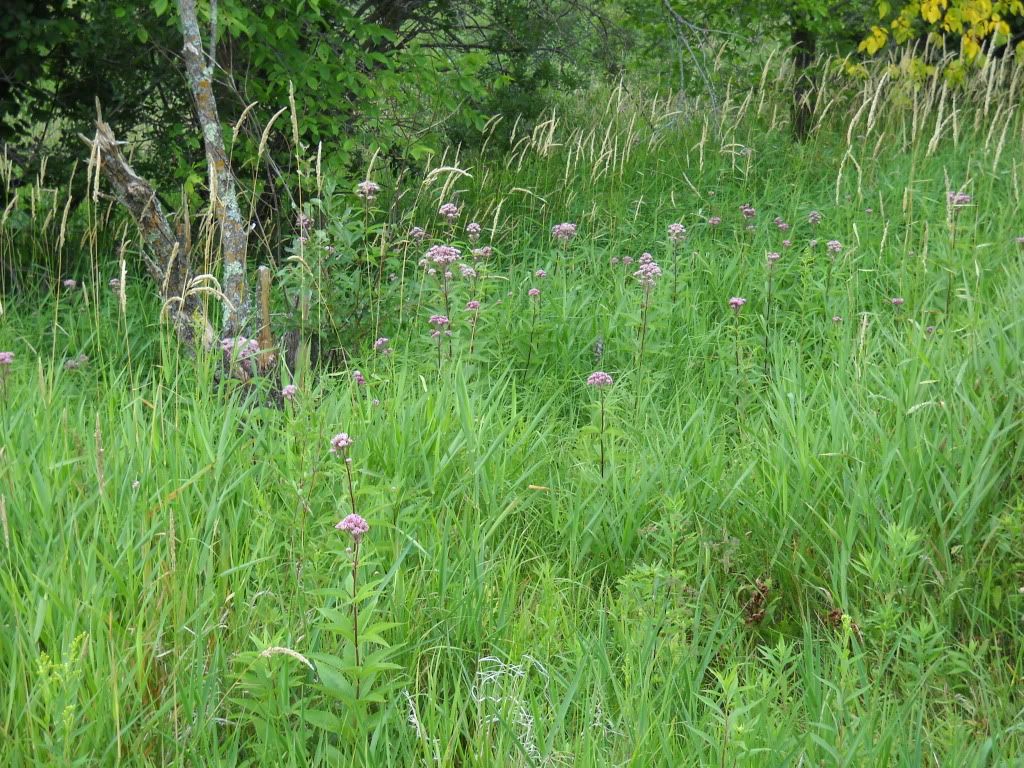
Looks like somebody needs to mow. This is Eupatorium fistulosum, also known as Joe-Pye Weed. With a name like that, who wouldn't want it in their yard!?
There are entire neighborhoods that are planting almost strictly native plants.
While I admit, this is a little formal for my taste, isn't this much prettier?


Okay, you want some reasons why you should plant natives? When used intelligently, native plants require less maintenance, are less expensive, and save energy. Did you know that lawnmowers are a significant source of air pollution? Lets, just for the sake of argument say this is true. Well then,lets just all stop mowing our yards. Problem solved!
Used properly, native plants require little to no extra water or fertilizer compared to most exotics. This is sounding like the lazy mans landscape solution.
Native plants have been exposed to most pests as long as they have existed, and continue to display their resistance to insects and disease in our own yards. So what do the bugs eat, each other? They need to survive too.
This is an excerpt from a Native Plant Societies newsletter down in Florida:
With historical perspective, this is an amazing development. In past centuries, when corners of this planet were yet unexplored, botanists brought horticultural oddities from hither and yon to beautify the gardens of the elite. To adorn one's garden with plant species that were foreign, rare and unusual was a mark of wealth and status. Only the leisure class who studied botany and horticulture could identify and appreciate these collections. Today, by contrast, exotic plants are no longer the exception but the rule; everyone has them, regardless of their socioeconomic standing. It is the inclusion of native species in one's garden that is now distinctive and unusual, and ironically, only those with a special interest in native plants can identify and appreciate these native collections.
If you want something really strange and unusual in your garden, go native!
I would like to disagree with that last sentence. I have growing in my yard some very unusual plants that NOBODY else in this area is growing. My variegated Chinaberry is very unusual and it is definitely NOT native....Chinaberry? Hello.
If it were not for the exotics coming into this country, we would be in some financial hardships....okay, even more than we are now. How much do you think it would cost to import Orange Juice from China instead of Florida? Citrus is native to our Asian friends.
Another example would be that PB&J you gave your kids for lunch. Do you think Peanuts are native to North America? Nope! The peanut is native to South America.
So leave my exotic plants alone and I will try and tolerate your Native Plant fetish.
For those of you that don't quite get this article, it is mostly tongue in cheek.
On a serious note, look into some native plants for your area. Everything is native to somewhere. While I admit, I do not like most native plants for my area, they can and do have their place in the landscape. Besides, I have a lot of Master Gardener friends that love their natives and will probably want to boil me in Witch Hazel after they read this. It is a native you know!
Happy Growing!
Darren

Sunday, September 5, 2010

Not Again!.... SOS for Citrus

I had initially planned on writing about something else today, UNTIL......this came across my E-Mail: New Citrus Disease Confirmed In Texas And Louisiana. I won't reuse the exact words I said when I saw this, but "Oh Crap" will suffice. I could not imagine what they had discovered now. The word "New" is what scared me. I knew Citrus Greening was already present here in the states, but what could be new?
This is where the title is a little hint. They discovered Sweet Orange Scab (SOS).
This is the first detection in the U.S. of the fungal pathogen, Elsinoe australis. The infected citrus trees were found on residential properties in Harris and Orange counties in Texas, and in Orleans parish, LA.
Luckily, it has not been found in Florida yet. They have enough problems with: Alternaria brown spot, Blight, Citrus Canker, Greening, Greasy Spot, Melanose, Phytophthora-induced diseases (foot and root rot, brown rot), Postbloom fruit drop, tristeza and common Scab. Yes, you read that correctly, common Scab. Common Citrus scab is serious on many tangerines and tangerine hybrids such as Temple, as well as grapefruit and lemons, but rarely causes lesions on sweet orange. In contrast, Sweet Orange Scab can cause significant damage on all sweet oranges as well as tangerines and their hybrids.
The damage produced is superficial and does not affect internal fruit quality or taste. Infected fruit are more likely to drop prematurely. It poses no harm to human health.
Sweet Orange Scab is common in humid citrus growing areas of South America such as Argentina, Bolivia, Brazil, Ecuador, Paraguay, and Uruguay. It had not been seen here in the U.S. until this past July. Surveys completed in Texas, within a 1 square mile of the initial detection has resulted in 6 additional detections on citrus trees located on 4 separate residential properties; all in close proximity to the initial Harris County detection. The detection in Orange County, Texas, which was on some Satsuma trees is located about 100 miles east of the initial find. In August, the find of the Sweet Orange Scab was discovered in the Louisiana site on a Lime tree. Incidentally, this disease was discovered while on a routine check for Citrus Greening disease.
The causal agent of Sweet Orange Scab is the fungus Elsinoe australis, which is quite similar to Elsinoe fawcetti, the cause of common citrus scab, but clearly a distinct species. In contrast to Common Citrus Scab, The sweet scab does not form lesions on leaves or twigs. The symptoms are corky, wart-like pustules on the fruit that are tan to gray in color. These lesions are flatter than those produced by the common citrus scab.
SCAB ON RIPE FRUIT..Photo courtesy of IFAS Extension
The Sweet Scab pathogen requires moisture for production of spores and for infection to occur. The fungus attacks only young fruit. Fruit are susceptible for 6 to 8 weeks after the flower petals fall off. Fungus spores are primarily distributed by rain or irrigation being splashed between trees, and can also be spread short distances by air. The common Citrus scab pathogen survives in unfavorable conditions in old leaves and stem lesions. Long distance spread is due to the movement of infected fruit by humans. How this outbreak occurred and spread is still being investigated.
As with Common Citrus Scab, Sweet Orange Scab can be controlled by properly timed fungicide applications. Sweet Orange Scab must be controlled and confined to where it already is, even though it primarily only affects fruit for the fresh market. Why you ask? Given that the climatic conditions in Florida are suitable for establishment of the pathogen, it would increase production costs of fresh market citrus if it were introduced into that state. That Orange you take to work for lunch could suddenly skyrocket in price.
This leads me back to a theme that I have launched into numerous times on my blog. PLEASE, do not bring any exotic fruit, twig, leaf, stem or plant from another country into the United States. Just one infected plant could cause millions and millions of dollars in damage and losses. THIS disease does not look like it will be as major as Greening disease is, but it sure is going to cause a lot of headaches for the already stressed Citrus producer.
Please, I know this is probably getting old to some of you, stop the illegal importation of plant material. If you are traveling abroad, take lots of pictures, leave the cuttings and plants there. There is a lot of money at stake, and entire industries that could be in jeopardy...the plants you save, might even be ours!
Happy Growing!
Darren

Wednesday, September 1, 2010

My Citrus Gets the Bird

If my poor Citrus trees have not had enough problems this year with the early, intense heat, Whitefly, Mealybugs, Black Sooty Mold, too much water, not enough water......Now, they are getting the bird!
I am not sure what kind of bird it is, more than likely Grackles, I haven't been able to catch them in the act, but I do recognize the damage. It looks something like this:

When it comes to Citrus, bird damage does not affect the fruit. It makes it ugly, but it is still edible. Injured peel tissue becomes blackened and develops a pock-marked surface cosmetically unacceptable for the fresh market. As the fruit approaches maturity later in the season, however, birds may penetrate into the pulp, thereby spoiling the fruit and causing it to drop.
As you all know, bird damage is probably the biggest problem fruit producers deal with. Everything from Blueberries to Strawberries, Peaches to Apples have problems with bird damage.
One thing that causes so much frustration is, birds rapidly become accustomed to conventional noise-generating devices. There have been many different things tried over the years, from the common scarecrow, to pie plates, and Barry Manilow CD's, both fluttering in the wind and being played in the field. They work for a little while, but the birds still become accustom to them and probably actually laugh at our feeble attempts, especially the Barry Manilow CD's!
Nets are by far the most effective means to thwart their attempts. As long as you are trying to protect a shrub or a small tree. Just make sure the net comes all the way down to the ground and is secure, or the little fiends will get under it and rob you anyway. If you have a large tree, this method probably won't work either.
While researching for this article, I came across some rather interesting things that, to some extent, work.
According to the Internet Center for Wildlife Damage Management website, Propane exploders (some with timers that automatically turn them on and off each day) are the most popular frightening devices. Just the name of this one actually scares me! Though, they look like they might be kind of fun:
They say, In general, use at least one exploder for every 10 acres of crop to be protected. Elevate exploders on a barrel, stand, or truck bed to “shoot” over the crop, and move them around the field every few days. Basically, Propane exploders make a loud sound that frightens the birds, it probably doesn't do much for your neighbors either.
They say in conjunction with the propane exploders, you can enhance this method by shooting a .22 caliber rifle just over the top of a crop, a person on a stand or truck bed can frighten birds from fields of 40 acres or more. Okay, again, this method tends to frighten me a little!
There are of course a variety of other bird-frightening devices, including electronic noise systems, helium-filled balloons tethered in fields, radio-controlled model planes, reflecting tapes made of mylar, tape-recorded distress calls of birds and the good old use of firecrackers. The effectiveness of any of these is highly variable, depending on the persistence of the operator, the skill used in employing a device, and the proximity of your neighbors.
I also found a Japanese study that studied the effectiveness of a dog for protecting citrus fruits from bird damage during harvest season. A Border Collie Shepherd was tied to a wire extended along one side of a square orchard to allow him to run along the inner side of the orchard. This watchdog system was effective in reducing fruit damage by birds only in the Citrus tree row nearest to the dog runway.
Then the orchard was enclosed with a tall chain-link fence and the same dog was allowed to move freely in the orchard. In this case, he persevered in chasing birds until they flew away from the orchard. This watchdog system effectively reduced bird damage to Citrus fruits all over the orchard.
So, I guess the moral of this story is.....You want to protect your fruit, get yourself a dog, your neighbors will appreciate that a lot more than having propane explode every so often!
Happy Growing!
Darren