One of the recent common questions that have been asked in the garden center of late has been, "WHAT, are those metallic looking bugs and are they actually eating my plants?"
If you haven't seen them yourself, maybe you have seen some damage like this?
Those metallic insects and this kind of damage is none other than, The Japanese Beetle!
Popillia japonica as it is commonly known throughout the eastern half of the country, and probably many other parts of the world. It is just over one half inch long and just under one half inch wide. They are an iridescent copper and green color.
Photo Courtesy of WashingtonTimes.com
It is not very destructive in Japan, where it is controlled by natural predators, but in North America, it is a serious pest of over 200 species of plants, including Rose Bushes, Grapes, Peaches, Crape Myrtles, Apples, and others.
If you have ever complained about quarantines being in place, here is an example of why they exist. As the name suggests, the Japanese beetle is native to Japan. The insect was first found in the United States in 1916 in a nursery near Riverton, New Jersey. It is thought the beetle larvae entered in a shipment of iris bulbs prior to 1912 when inspections of commodities entering the country began. "The first Japanese beetle found in Canada was in a tourist's car at Yarmouth, arriving in Nova Scotia by ferry from Maine in 1939. The destructive rest, as they say, is history.
The eastern U.S. provided a favorable climate, large areas of turf and pasture grass for developing grubs, hundreds of species of plants on which adults could feed, and no effective natural enemies. The beetle thrived under these conditions and has steadily expanded its geographic range.
The life cycle of the Japanese beetle is typically one year in most parts of the United States. Eggs are laid in the soil one to four inches deep in mid to late summer and hatch after about two weeks. The young grubs feed primarily on the roots of lawn grasses until the onset of cold temperatures where they go deeper into the soil for the winter.
Japanese Beetle Grub-Photo Courtesy of https://georgeweigel.net
As the soil warms again in the spring, the grubs move upward to resume feeding on roots until pupating near the soil surface in early summer. Adults usually emerge in early to mid-summer, but apparently this year they were not paying attention to the calendar, plus the weather has been so crazy here, who really knows what time it is!?
So, they are here. What to do about them?
I will cover a few ways, from least toxic to the nuclear option.
If you have a small yard or a light infestation, you can just pluck the critters off and drop them in a bucket of soapy water. Leave this bucket out where the other beetles can see it, there is some evidence that the carcasses of other dead beetles may repel new invaders.
Photo Courtesy of Johnson County Extension - Kansas State University
Traps are sold widely for Japanese beetle monitoring and control. Traps are highly attractive and draw beetles to them over large distances, so putting a trap in your yard will draw beetles from the surrounding landscape. Many of the attracted female beetles do not get trapped and end up landing on foliage nearby and feeding or mating then laying eggs in the soil near the trap, this creates a hot-spot for next season. So this may not be a good idea.
Milky spore, Paenibacillus popilliae, is a bacterium that, when present in the soil, can help in the control of the grubs. You would need to get your neighbors to apply this also because such a large area needs to be treated for a significant impact on the beetle population, it is usually not an effective treatment for individual homeowners.
Neem Oil can be useful. It is labeled for organic use, it will suffocate some, has some repellent activity by deterring feeding and it can disrupt the reproductive cycle. It is actually interesting how this oil works. Neem enters the system and blocks the hormones from working properly. Insects "forget" to eat, to mate, or they stop laying eggs. Some forget that they can fly. If eggs are produced they don't hatch, or the larvae don't molt. Hence, the cycle is broken. If you use it every year, you eventually will dwindle their numbers. Make sure you read the label and don't apply if the temperature is over 75 degrees. Apply either early in the morning or early evening. Spraying as many of the insects as possible.
Getting into the nuclear options and these should be a last resort. Pyrethroid products such as Bayer Advanced Insect Killer and Permethrin products such as Spectracide Triazicide Insect Killer for Lawns & Landscapes Concentrate generally provide 2-3 weeks of protection.
Carbaryl or better known as Sevin dust and others, provides immediate control of beetles present during the application and affords 1-2 weeks of protection . This is a stomach poison, so if beetles eat treated foliage they will also receive a higher dose. This can be a good control of Japanese beetles since they eat so much that a strong dose of insecticide is taken up. However, you, your family and the environment are also exposed to this poison. There is a threshold of the amount of damage that can be tolerated to your plants. I only recommend the nuclear option if that threshold has been surpassed. Make sure you read and follow the directions on the label, it is the law!!
I foresee myself getting ready to pull the nuclear option. This is what my grape vines look like:
I can't seem to get home in time from work to catch them and use the neem, so I will probably put down some Sevin dust in hopes that will work.
As always, if you have any questions concerning this or any of my other articles, feel free to e-mail: TheCitrusGuy@netzero.com
You can find me on Facebook as The Citrus Guy or my new Website
Happy Growing!
Darren
Showing posts with label Japanese beetles. Show all posts
Friday, June 8, 2018
Sunday, September 11, 2011
A Rose by any other name.....
...may not even be a Rose!
This is where the common names of plants can really get you in trouble. The past couple of weeks, I have been asked about some of the tall bushes that have all kinds of flowers on them. What are they? Is the most common question, followed by: Are they hard to grow? and Where do you get them?
The plant in question here is the Rose of Sharon, If you lived in Britain or Australia they would think you are talking about Hypericum calycinum, which is an evergreen flowering shrub native to Southeast Europe and Southwest Asia. We know it here as St. John's Wort.
It looks like this:
I know there are a bunch of people that just had a cow! That is NOT a Rose of Sharon!! It is if you live in Australia or Britain.
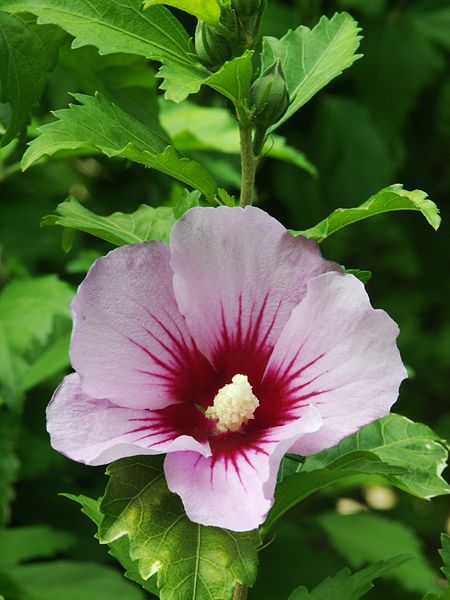
Here in the good old USA, the Rose of Sharon (Hibiscus syriacus) looks like this:

THIS is the plant everybody has been asking me about.
See how common names can get very confusing? Depending on who you ask, or where they are from may determine what kind of plant you get. That is why I try to talk in botanical names whenever possible. It also goes by other common names such as: Althea Rose, Syrian Rose, and Shrubby Althea. There are many other plants out there with an identity crisis, but I digress.
The Rose of Sharon (Hibiscus syriacus) is a deciduous (loses its leaves) flowering shrub native to East Asia. It is the national flower of South Korea and was mentioned in an article produced 1,400 years ago. So this flower has been around for quite sometime.
It is an upright plant that produces colorful, cup-shaped flowers in Summer and Fall. They can range from 2-4 inches across.
The colors are almost infinite in number, including blue, pink, red, lavender, purple, white, and many of these in combinations depending on the variety.


Some have flowers that strongly resemble the familiar hibiscus; as you can see above. There are others that have small double petals that appear rose-like or are almost like a peony.

The Rose of Sharon grows well in USDA hardiness zones 5B through 9A. It will attain a pretty decent size. Averaging from 8-10 feet tall and 6-8 feet wide. It is best to grow Rose of Sharon in full sun, it can tolerate up to part shade. It prefers moist, well drained soil that contains lots of organic matter, though, it is able to tolerate a wide variety of soil and drought conditions. The plant may survive extreme conditions, but the buds may drop off if the plant is watered too much or too little, or if too much fertilizer is applied. When it comes to feeding, fertilize your Rose of Sharon just before the flowering period. Apply a balanced granular fertilizer according to the package directions.
If you want bigger blooms, in the Winter or early Spring, prune off last seasons growth. It will flower on the new growth. This is also a good time to be propagating them. It is easily propagated by hardwood cuttings that are 4 - 6 inches long taken in the Winter and planted about 1-1.5 inches deep in a mixture of coarse sand and peat moss. Stick the cut ends in some rooting hormone and keep these warm, moist and humid. You can also use softwood cuttings in the Spring, using the same method as above.
Aphids and Spider Mites can be a real nuisance, However, one of the biggest problems that Rose of Sharon faces is the Japanese Beetle.

If you have leaves that look like this, then you have a Japanese Beetle problem.

My mother just cringed when she saw these pictures, she is very accustomed to this problem. Her favorite way to deal with it, walk around the yard with a bucket of soapy water and drown the little varmints.
You can also use a product called Milky Spore. It is an organic approach to ridding your yard of the grubs that turn into the beetles. One word of caution, you will need to get pretty much your entire neighborhood involved in this. Just because your yard is protected, they live next door, and the pupating beetles will fly over for a feast.
Diseases that you need to be aware of include leaf spot, blight, and cankers. These can be controlled with fungicides or proper placement of plants. Make sure that there is good air circulation between them and they are planted in the proper place.
As you can imagine, with a history as long as this beautiful flower, there are some interesting tidbits surrounding it, especially in the world of music.
"Rose of Sharon" is a song by Robert Hunter (From the Grateful Dead) which he released on his solo album Tiger Rose.
"Rose of Sharon" is a song sung by Joan Baez on the album Day After Tomorrow.
Judah Robertson has an album entitled "Rose of Sharon".
The Rose of Sharon is referenced in the Bob Dylan song "Caribbean Wind."
Rose of Sharon is also the official flower of Phi Beta Chi, a national Lutheran-based Greek social letter sorority.
There are many, many other references to the Rose of Sharon from Biblical mentions to Novels and Poetry. I just find the flower very pretty and I hope you do too.
Just remember, a Rose by any other name...might just be something completely different!
Happy Growing!
Darren
This is where the common names of plants can really get you in trouble. The past couple of weeks, I have been asked about some of the tall bushes that have all kinds of flowers on them. What are they? Is the most common question, followed by: Are they hard to grow? and Where do you get them?
The plant in question here is the Rose of Sharon, If you lived in Britain or Australia they would think you are talking about Hypericum calycinum, which is an evergreen flowering shrub native to Southeast Europe and Southwest Asia. We know it here as St. John's Wort.
It looks like this:
I know there are a bunch of people that just had a cow! That is NOT a Rose of Sharon!! It is if you live in Australia or Britain.
Here in the good old USA, the Rose of Sharon (Hibiscus syriacus) looks like this:
THIS is the plant everybody has been asking me about.
See how common names can get very confusing? Depending on who you ask, or where they are from may determine what kind of plant you get. That is why I try to talk in botanical names whenever possible. It also goes by other common names such as: Althea Rose, Syrian Rose, and Shrubby Althea. There are many other plants out there with an identity crisis, but I digress.
The Rose of Sharon (Hibiscus syriacus) is a deciduous (loses its leaves) flowering shrub native to East Asia. It is the national flower of South Korea and was mentioned in an article produced 1,400 years ago. So this flower has been around for quite sometime.
It is an upright plant that produces colorful, cup-shaped flowers in Summer and Fall. They can range from 2-4 inches across.
The colors are almost infinite in number, including blue, pink, red, lavender, purple, white, and many of these in combinations depending on the variety.
Some have flowers that strongly resemble the familiar hibiscus; as you can see above. There are others that have small double petals that appear rose-like or are almost like a peony.
The Rose of Sharon grows well in USDA hardiness zones 5B through 9A. It will attain a pretty decent size. Averaging from 8-10 feet tall and 6-8 feet wide. It is best to grow Rose of Sharon in full sun, it can tolerate up to part shade. It prefers moist, well drained soil that contains lots of organic matter, though, it is able to tolerate a wide variety of soil and drought conditions. The plant may survive extreme conditions, but the buds may drop off if the plant is watered too much or too little, or if too much fertilizer is applied. When it comes to feeding, fertilize your Rose of Sharon just before the flowering period. Apply a balanced granular fertilizer according to the package directions.
If you want bigger blooms, in the Winter or early Spring, prune off last seasons growth. It will flower on the new growth. This is also a good time to be propagating them. It is easily propagated by hardwood cuttings that are 4 - 6 inches long taken in the Winter and planted about 1-1.5 inches deep in a mixture of coarse sand and peat moss. Stick the cut ends in some rooting hormone and keep these warm, moist and humid. You can also use softwood cuttings in the Spring, using the same method as above.
Aphids and Spider Mites can be a real nuisance, However, one of the biggest problems that Rose of Sharon faces is the Japanese Beetle.
If you have leaves that look like this, then you have a Japanese Beetle problem.
My mother just cringed when she saw these pictures, she is very accustomed to this problem. Her favorite way to deal with it, walk around the yard with a bucket of soapy water and drown the little varmints.
You can also use a product called Milky Spore. It is an organic approach to ridding your yard of the grubs that turn into the beetles. One word of caution, you will need to get pretty much your entire neighborhood involved in this. Just because your yard is protected, they live next door, and the pupating beetles will fly over for a feast.
Diseases that you need to be aware of include leaf spot, blight, and cankers. These can be controlled with fungicides or proper placement of plants. Make sure that there is good air circulation between them and they are planted in the proper place.
As you can imagine, with a history as long as this beautiful flower, there are some interesting tidbits surrounding it, especially in the world of music.
"Rose of Sharon" is a song by Robert Hunter (From the Grateful Dead) which he released on his solo album Tiger Rose.
"Rose of Sharon" is a song sung by Joan Baez on the album Day After Tomorrow.
Judah Robertson has an album entitled "Rose of Sharon".
The Rose of Sharon is referenced in the Bob Dylan song "Caribbean Wind."
Rose of Sharon is also the official flower of Phi Beta Chi, a national Lutheran-based Greek social letter sorority.
There are many, many other references to the Rose of Sharon from Biblical mentions to Novels and Poetry. I just find the flower very pretty and I hope you do too.
Just remember, a Rose by any other name...might just be something completely different!
Happy Growing!
Darren
Subscribe to:
Posts (Atom)