I had a fellow Master Gardener send this to me. I have often thought how nice it would be to use this product. The smell would put me in Heaven. I am a chocoholic to the nth degree!
Cocoa Mulch is sold by many garden supply stores. It contains a lethal ingredient called 'Theobromine'. It is lethal to dogs. While it's equally toxic to cats, veterinarians say they are less likely to ingest cocoa products and therefore less at risk. I always knew cats were smarter than dogs! Sorry, I am a cat person, and I digress. It smells like chocolate and it really attracts dogs.. They will ingest this stuff and die.
Theobromine is in all chocolate, especially dark or baker's chocolate. Cocoa bean shells contain potentially toxic quantities of theobromine, a xanthine compound similar in effects to caffeine and theophylline. A dog that ingested a lethal quantity of garden mulch made from cocoa bean shells developed severe convulsions and died 17 hours later. Analysis of the stomach contents and the ingested cocoa bean shells revealed the presence of lethal amounts of theobromine.
This particular story seems to have some doubters.
The original story had to do with a dog named Calypso. The story being circulated about this young dog ingesting cocoa bean shell mulch may be true. However, Dr. Steve Hansen, Director of the American Society for the Prevention of Cruelty to Animals' Animal Poison Control Center has said, the cause of the dog's death is "highly suspect." The statement that she vomited a few times is consistent with such poisoning, but not the absence of other clinical signs until the next day, when the dog is said to have had a single seizure during her morning walk and died instantly.
He also said, "You get a progression of signs,vomiting, diarrhea, more vomiting, trembling, the heart rate kicks up, then it may progress to seizures if the dose is exceptionally high, with death being uncommon. There was probably an underlying condition that caused the dogs death".
Cocoa mulch contains 300-1200 mg of Theobromine, per ounce, making it a very strong concentration. It is true that studies have shown that 50% of the dogs that eat Cocoa Mulch can suffer physical harm to a variety of degrees (depending on each individual dog). However, 98% of all dogs won't eat it. I know of a couple of dogs that actually ate Chocolate and they were fine. I am not, BY ANY MEANS, advocating this, just an observation.
There are some benefits to using this kind of mulch. It is 100% organic. Cocoa Shell Mulch contains approximately 2.5% Nitrogen, 1% Phosphate and 3% Potash. It does not act like a wood based ground cover which removes nitrogen from the soil as it breaks down. There is also some research showing that it contains a natural gum that, when activated with water, the cocoa shells bond into a loosely knit porous mat. This enables cocoa shell mulch to do a better job of slowing soil moisture loss through evaporation and retarding weed growth. The texture of cocoa shells deters slugs and snails to help prevent plant damage. It has also been discovered to discourage termites. Plus it smells like Chocolate!!
So, I guess it boils down to a couple of things. If you are always outside with your dog and can keep an eye on what it gets into, go ahead and use it. If, on the other hand, your dog is outside by itself a lot and can get into the mulch, you may want to reconsider it and use some other kind, possibly Cedar or Pine.
I personally do not use a lot of mulch, but if I did, I would love to get some of this stuff. My dog NEVER goes outside without me or the wife, and having the smell of Chocolate greet us each time we walked outside would be wonderful!!
Happy Growing!
Darren
Saturday, April 17, 2010


Friday, April 16, 2010
Happy Summer Citrus
Spring kind of got left in the dust in some parts of the country. Summer decided it wanted to be the boss. Fine by me. So, with the very warm weather already upon us, I wanted to write an article about keeping your Citrus happy through the dog days of Summer.
Many of these will cross over from in the ground to container grown, I will specify as need be.
Timely watering is essential for proper growth and fruiting. More trees are stunted or lost by drought stress than from any other cause, except maybe over watering. Make sure there is adequate moisture in the soil before wilting occurs. To avoid over watering, excess water must drain away. Hence a well draining soil, that retains some moisture, and a good amount of drainage holes are needed in a container.
Very hot days, and hot winds, which extract water from the leaves faster than the roots can draw it up from the soil, may cause temporary wilting. Even if there is ample water present, this can happen. A cool misting of the leaves will help alleviate this. Remember, a drastic swing from moist to dry, can cause blossoms and small fruit to drop. Larger fruit may be reduced in size or drop.
Another trick to use on container grown Citrus, when the temperatures are soaring, is to paint the town white. Get some of the white spray paint that is used on plastics and spray half of the pot. The best half to paint is the side that gets the most late afternoon sun, basically speaking, the West side. The reason for this is, the root zone of plants can easily reach 120 degrees in the sun, especially if using black containers. During the late Fall, Winter and early Spring, you can just turn the painted side to the North. This way the roots will stay a little warmer.
Mulches are beneficial. They conserve moisture, control soil temperatures, prevent soil compaction, reduce water runoff and control weed growth. Keep any mulch that tends to stay wet a few inches away from the trunk. Citrus are very susceptible to bark diseases encouraged by moisture at or near the soil level. Mulches CAN be used in containers! Just remember to keep it away from the trunk, this may not be very useful in smaller containers however.
There are twelve mineral elements citrus trees need in order to be healthy. The major ones are Nitrogen, Phosphorus, Potassium, Magnesium, Calcium, and Sulfur. These are needed in larger quantities. The so called, “Micro” nutrients are Iron, Zinc, Manganese, Molybdenum, Copper and Boron. These are not needed in as large a quantity. If you are going to grow Citrus in the ground it is best to do a soil test to see if you have any deficiencies. When Citrus is grown in containers they can easily be deficient in any of the above. Make sure you look for a fertilizer that contains as many, if not all, of these vital nutrients. Again, a soil test can be done if there is any doubt. If using a water soluble fertilizer, feed every two to three weeks when grown in containers. Probably once a month will be fine when in the ground.
Fish emulsion is a nice treat for your Citrus. A foliar feeding at least once a month will add extra Nitrogen, which of course, Citrus are heavy feeders of. If you want to spoil your citrus, more often will not hurt.
Don’t be alarmed if a few small immature fruits turn yellow and fall off. Citrus will naturally shed a number of fruit a month or so after blooming. Called the June drop, it is a natural process. If your tree is in a stressed state they can drop all the fruit. Follow the above suggestions and you should have no problems getting your Citrus trees through the “Dog Days” of Summer. Boy it's hot, anybody for a lemonade?
Happy Growing!
Darren
Many of these will cross over from in the ground to container grown, I will specify as need be.
Timely watering is essential for proper growth and fruiting. More trees are stunted or lost by drought stress than from any other cause, except maybe over watering. Make sure there is adequate moisture in the soil before wilting occurs. To avoid over watering, excess water must drain away. Hence a well draining soil, that retains some moisture, and a good amount of drainage holes are needed in a container.
Very hot days, and hot winds, which extract water from the leaves faster than the roots can draw it up from the soil, may cause temporary wilting. Even if there is ample water present, this can happen. A cool misting of the leaves will help alleviate this. Remember, a drastic swing from moist to dry, can cause blossoms and small fruit to drop. Larger fruit may be reduced in size or drop.
Another trick to use on container grown Citrus, when the temperatures are soaring, is to paint the town white. Get some of the white spray paint that is used on plastics and spray half of the pot. The best half to paint is the side that gets the most late afternoon sun, basically speaking, the West side. The reason for this is, the root zone of plants can easily reach 120 degrees in the sun, especially if using black containers. During the late Fall, Winter and early Spring, you can just turn the painted side to the North. This way the roots will stay a little warmer.
Mulches are beneficial. They conserve moisture, control soil temperatures, prevent soil compaction, reduce water runoff and control weed growth. Keep any mulch that tends to stay wet a few inches away from the trunk. Citrus are very susceptible to bark diseases encouraged by moisture at or near the soil level. Mulches CAN be used in containers! Just remember to keep it away from the trunk, this may not be very useful in smaller containers however.
There are twelve mineral elements citrus trees need in order to be healthy. The major ones are Nitrogen, Phosphorus, Potassium, Magnesium, Calcium, and Sulfur. These are needed in larger quantities. The so called, “Micro” nutrients are Iron, Zinc, Manganese, Molybdenum, Copper and Boron. These are not needed in as large a quantity. If you are going to grow Citrus in the ground it is best to do a soil test to see if you have any deficiencies. When Citrus is grown in containers they can easily be deficient in any of the above. Make sure you look for a fertilizer that contains as many, if not all, of these vital nutrients. Again, a soil test can be done if there is any doubt. If using a water soluble fertilizer, feed every two to three weeks when grown in containers. Probably once a month will be fine when in the ground.
Fish emulsion is a nice treat for your Citrus. A foliar feeding at least once a month will add extra Nitrogen, which of course, Citrus are heavy feeders of. If you want to spoil your citrus, more often will not hurt.
Don’t be alarmed if a few small immature fruits turn yellow and fall off. Citrus will naturally shed a number of fruit a month or so after blooming. Called the June drop, it is a natural process. If your tree is in a stressed state they can drop all the fruit. Follow the above suggestions and you should have no problems getting your Citrus trees through the “Dog Days” of Summer. Boy it's hot, anybody for a lemonade?
Happy Growing!
Darren
Thursday, April 15, 2010
Look, The Cercis is in Town!
Okay, the title is really silly, I know. In case you want to know how to say it, think big tops and elephants. This past Winter has been well documented as really nasty all over the country, I don't need to remind you of this. The South is not accustomed to two solid weeks of below freezing night time temperatures and 3-7 inches of Snow. I joke around and tell anybody that even mentions snow, I will pop them with a toboggan!
However, I will admit, this Winter was good for numerous reasons. I fully believe that Mother Nature hit the reset button. There are things flowering this year that either have never flowered before or are flowering so heavy it is almost magical. Case in point is my Cercis canadensis (Eastern Redbud). Check out this color:


They have never been this pretty. I will also admit, these were taken a couple of weeks ago and the tree is starting to produce leaves now. But even the leaves are pretty. These are young leaves:

Eastern Redbud is a small, short lived deciduous tree (meaning it looses it's leaves) found throughout the eastern United States. It's range is from New Jersey to the panhandle of Florida and as far west as Nebraska and Texas. Zones 4-9.
It can grow on a wide range of well draining soils, though it does not like course sands. They average 20-30 feet tall, and 25-35 feet wide.
Redbuds flower in the early Spring and produce seed pods. The pods are 2 to 3", brown, and in clusters. They will contain anywhere from 4 to 10 seeds. Most seeds are dispersed during Fall and Winter by the wind and animals. Many seeds are injured by insects. Those that fall to the ground usually remain dormant for several years.
Redbuds can be propagated by seed. Dried seeds can be stored in glass jars or a metal container at 35 to 41 degrees. The seeds should then be planted in a well prepared seed bed in late April or early May.
They are used extensively as an ornamental, even though the wood is heavy, hard, and close grained. Because of it's small size and irregular shape of the tree however, it is of no commercial value as a source of lumber.
If the beauty of the tree does not convince you to grow one, there have been other documented uses. Bark of the Redbud has been used as an astringent in the treatment of dysentery. Flowers of the tree can be put into salads or fried and eaten. Cardinals have been observed feeding on the seeds, and seeds have been consumed by ring-necked pheasants and rose-breasted grosbeaks. White tailed deer and gray squirrels have also been observed feeding on the seeds. Flowers of the tree are regarded as important in the production of honey by bees.
So, as you can see the Redbud is not only a pretty tree, it can be useful as well.
Why not make some room for one, so you can say that the Cercis (circus) is in town??!!
Happy growing!
Darren
However, I will admit, this Winter was good for numerous reasons. I fully believe that Mother Nature hit the reset button. There are things flowering this year that either have never flowered before or are flowering so heavy it is almost magical. Case in point is my Cercis canadensis (Eastern Redbud). Check out this color:


They have never been this pretty. I will also admit, these were taken a couple of weeks ago and the tree is starting to produce leaves now. But even the leaves are pretty. These are young leaves:
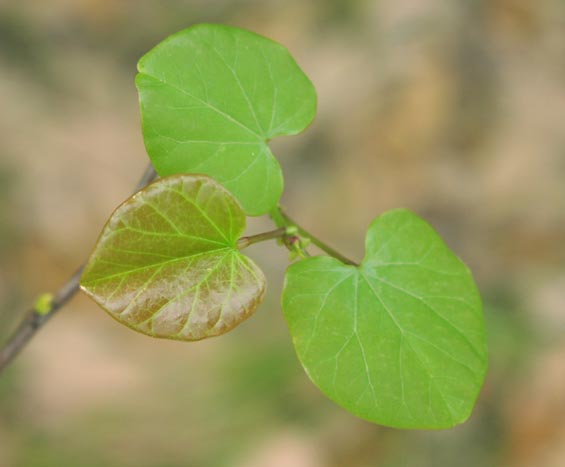
Eastern Redbud is a small, short lived deciduous tree (meaning it looses it's leaves) found throughout the eastern United States. It's range is from New Jersey to the panhandle of Florida and as far west as Nebraska and Texas. Zones 4-9.
It can grow on a wide range of well draining soils, though it does not like course sands. They average 20-30 feet tall, and 25-35 feet wide.
Redbuds flower in the early Spring and produce seed pods. The pods are 2 to 3", brown, and in clusters. They will contain anywhere from 4 to 10 seeds. Most seeds are dispersed during Fall and Winter by the wind and animals. Many seeds are injured by insects. Those that fall to the ground usually remain dormant for several years.
Redbuds can be propagated by seed. Dried seeds can be stored in glass jars or a metal container at 35 to 41 degrees. The seeds should then be planted in a well prepared seed bed in late April or early May.
They are used extensively as an ornamental, even though the wood is heavy, hard, and close grained. Because of it's small size and irregular shape of the tree however, it is of no commercial value as a source of lumber.
If the beauty of the tree does not convince you to grow one, there have been other documented uses. Bark of the Redbud has been used as an astringent in the treatment of dysentery. Flowers of the tree can be put into salads or fried and eaten. Cardinals have been observed feeding on the seeds, and seeds have been consumed by ring-necked pheasants and rose-breasted grosbeaks. White tailed deer and gray squirrels have also been observed feeding on the seeds. Flowers of the tree are regarded as important in the production of honey by bees.
So, as you can see the Redbud is not only a pretty tree, it can be useful as well.
Why not make some room for one, so you can say that the Cercis (circus) is in town??!!
Happy growing!
Darren
Wednesday, April 14, 2010
And YET, another reason
Well, I have posted in the past about the spread of diseases and other pests being transported across state lines. Back in March, yet another reason not to bring Citrus out of Florida was discovered. Citrus Black Spot. Here is the article I received about it.
Courtesy of Florida Grower Magazine:
The Animal and Plant Health Inspection Service (APHIS), Plant Protection and Quarantine (PPQ) confirmed the identification of Citrus Black Spot (Guignardia citricarpa; CBS) on citrus fruit from Collier County, FL. The CBS-infected fruit samples were collected from commercial Valencia orange groves. This is the first confirmation of CBS in the U.S.
The initial identification was made by the Florida Department of Agriculture and Consumer Services (FDACS), Department of Plant Industry (DPI) on March 25. The identification was made as a result of a routine Citrus Health Response Program (CHRP) survey at the grower’s request. Following the preliminary determination by FDACS that the fruit was infected with CBS, APHIS and FDACS personnel revisited the property and collected symptomatic fruit that was sent to the APHIS laboratory in Beltsville, MD, for confirmatory testing. The commercial citrus groves where CBS was confirmed produces fruit for juicing. An Emergency Action Notification has been issued requiring that the fruit be shipped to local processing plants under tarpaulin or within closed vehicles to prevent spread of CBS. A compliance agreement has been implemented to ensure appropriate cleaning of the conveyance and approved procedures for the disposal of debris. No fruit from the affected groves was shipped out of Florida.
To date, CBS has not been detected in other parts of Florida through multipest surveys conducted by FDACS DPI as part of the Federal CHRP Program.
APHIS and FDACS DPI continue to delimit the area to determine the extent of the infestation and are implementing the necessary phytosanitary procedures to prevent the spread of CBS from the infested orchard in Collier County.
Under IPPC standards, Guignardia citricarpa is considered to be a pest that is present only in some areas, and is subject to official control in the U.S.
“This detection demonstrates the effective and collaborative nature of the citrus health response program,” said Rebecca Bech, deputy administrator for APHIS’ plant protection and quarantine. “It has not only provided the infrastructure upon which we made this early detection but also the framework for APHIS’ regulatory response.
“We are working in collaboration with the Florida Department of Agriculture and Consumer Services, the University of Florida’s Citrus Research and Education Center and the citrus industry to limit the spread and impact of this disease through swift regulatory actions, education and informed compliance.”
A fungal disease marked by dark, speckled spots or blotches on the rinds of fruit, citrus black spot is an economically significant citrus disease. It causes early fruit drop, reduces crop yield and renders the highly blemished fruit unmarketable. While all commercial citrus cultivars are susceptible to citrus black spot, the most vulnerable are lemon and late-maturing citrus varieties like Valencia. Although disease symptoms are expressed clearest on the rinds of fruit, the risk of this disease spreading through fruit movement is minimal. The greatest risk of disease transmission is associated with the spores released from fallen, decomposing citrus leaves.
Citrus black spot occurs in subtropical regions of the world with summer rainfall. The disease has been found in Argentina, coastal areas of Australia, Brazil, China (mainland and Hong Kong), Indonesia, Japan, Kenya, Mozambique, Nigeria, Peru, Philippines, areas of South Africa with summer rainfall, Swaziland, Taiwan, Uruguay, Venezuela and Zimbabwe.
Here is what the disease looks like:

Now it has been documented that infected fruit will not spread the disease from state to state but the disease can be spread by using infected budwood. This is why it is illegal to transport any part of the Citrus tree out of Florida. Citrus Greening can also be transmitted via budwood. This is also why it is illegal to bring any plant into the United States from other countries without a permit, not just Citrus. This is the first case of Citrus Black Spot being found in the US, How in the world do you think it got here? Somebody probably smuggled a plant in their suitcase or sent one to a friend through the mail. I am begging you, please do not bring Citrus trees, leaves, stems, budwood or any other part of the tree out of Florida. Please don't bring or send any plant into the states from another country either. If you know of anybody that has or will be, PLEASE pass this on.....I enjoy my Citrus trees too much, and the cost can be astronomical!
Happy Growing!
Darren
Courtesy of Florida Grower Magazine:
The Animal and Plant Health Inspection Service (APHIS), Plant Protection and Quarantine (PPQ) confirmed the identification of Citrus Black Spot (Guignardia citricarpa; CBS) on citrus fruit from Collier County, FL. The CBS-infected fruit samples were collected from commercial Valencia orange groves. This is the first confirmation of CBS in the U.S.
The initial identification was made by the Florida Department of Agriculture and Consumer Services (FDACS), Department of Plant Industry (DPI) on March 25. The identification was made as a result of a routine Citrus Health Response Program (CHRP) survey at the grower’s request. Following the preliminary determination by FDACS that the fruit was infected with CBS, APHIS and FDACS personnel revisited the property and collected symptomatic fruit that was sent to the APHIS laboratory in Beltsville, MD, for confirmatory testing. The commercial citrus groves where CBS was confirmed produces fruit for juicing. An Emergency Action Notification has been issued requiring that the fruit be shipped to local processing plants under tarpaulin or within closed vehicles to prevent spread of CBS. A compliance agreement has been implemented to ensure appropriate cleaning of the conveyance and approved procedures for the disposal of debris. No fruit from the affected groves was shipped out of Florida.
To date, CBS has not been detected in other parts of Florida through multipest surveys conducted by FDACS DPI as part of the Federal CHRP Program.
APHIS and FDACS DPI continue to delimit the area to determine the extent of the infestation and are implementing the necessary phytosanitary procedures to prevent the spread of CBS from the infested orchard in Collier County.
Under IPPC standards, Guignardia citricarpa is considered to be a pest that is present only in some areas, and is subject to official control in the U.S.
“This detection demonstrates the effective and collaborative nature of the citrus health response program,” said Rebecca Bech, deputy administrator for APHIS’ plant protection and quarantine. “It has not only provided the infrastructure upon which we made this early detection but also the framework for APHIS’ regulatory response.
“We are working in collaboration with the Florida Department of Agriculture and Consumer Services, the University of Florida’s Citrus Research and Education Center and the citrus industry to limit the spread and impact of this disease through swift regulatory actions, education and informed compliance.”
A fungal disease marked by dark, speckled spots or blotches on the rinds of fruit, citrus black spot is an economically significant citrus disease. It causes early fruit drop, reduces crop yield and renders the highly blemished fruit unmarketable. While all commercial citrus cultivars are susceptible to citrus black spot, the most vulnerable are lemon and late-maturing citrus varieties like Valencia. Although disease symptoms are expressed clearest on the rinds of fruit, the risk of this disease spreading through fruit movement is minimal. The greatest risk of disease transmission is associated with the spores released from fallen, decomposing citrus leaves.
Citrus black spot occurs in subtropical regions of the world with summer rainfall. The disease has been found in Argentina, coastal areas of Australia, Brazil, China (mainland and Hong Kong), Indonesia, Japan, Kenya, Mozambique, Nigeria, Peru, Philippines, areas of South Africa with summer rainfall, Swaziland, Taiwan, Uruguay, Venezuela and Zimbabwe.
Here is what the disease looks like:

Now it has been documented that infected fruit will not spread the disease from state to state but the disease can be spread by using infected budwood. This is why it is illegal to transport any part of the Citrus tree out of Florida. Citrus Greening can also be transmitted via budwood. This is also why it is illegal to bring any plant into the United States from other countries without a permit, not just Citrus. This is the first case of Citrus Black Spot being found in the US, How in the world do you think it got here? Somebody probably smuggled a plant in their suitcase or sent one to a friend through the mail. I am begging you, please do not bring Citrus trees, leaves, stems, budwood or any other part of the tree out of Florida. Please don't bring or send any plant into the states from another country either. If you know of anybody that has or will be, PLEASE pass this on.....I enjoy my Citrus trees too much, and the cost can be astronomical!
Happy Growing!
Darren
Tuesday, April 13, 2010
Wisteria
I had a friend ask me last night, if I knew the difference between Native Wisteria (Wisteria frutescens) and Chinese Wisteria (Wisteria sinensis) or Japanese Wisteria (Wisteria floribunda). I thought that this would make a good article for the blog.
They all have aggressive natures. Although their flowers are beautiful, They are definitely invasive. In fact, they run rampant throughout parts of the eastern half of the United States where they’ve escaped cultivation. In spring they’re conspicuous along roadsides, blanketing trees and shrubs with thick, heavy growth and flower clusters.
One of the best ways to tell them apart is, the pods of the two Asian Wisterias have velvety surfaces due to a thick covering of short hairs, whereas native Wisteria pods are smooth and hairless.
There are some other less obvious ways to tell them apart. The Asian varieties bloom in April and May, at least in South Carolina. You can probably figure which one you have by moving the dates around slightly. The Native variety blooms in June and July.
The Asian varieties also tend to sprawl and climb. The native will climb, but tends to grow more into shrubs and small trees.
The flowers will tell a story also, Asian varieties all bloom once, the native flowers bloom at the base and progress downward on the flower stem.
For the very observant, the Asian varieties have a pointed leaf tip, the natives, more blunted.
Now, if you really want to screw your head up, check this out. Both Chinese and American species twine counterclockwise. Japanese Wisteria, (Wisteria floribunda) twines clockwise.
Native Wisteria, also known as Atlantic Wisteria, grows naturally throughout most eastern states and several states west of the Mississippi River. The genus name, Wisteria, was established in the 18th century by renowned botanist Thomas Nuttall to honor his friend Caspar Wistar, a physician and patron of botany. Wisteria belongs to the third largest family of flowering plants, Fabaceae, also known as the bean or pea family. The beans are poisonous however on Wisteria species.
If you do want to try and grow some, they can be grown in Zones 3-9. Make sure the area that the Wisteria will be planted in has at least six hours of full sunlight. It prefers a moist, well drained soil with average nutrients in it, however it will grow well, regardless of the soil it is planted in. If you feed it too much however, it will reduce the amount of blooms. It can be grown from cuttings or seeds. Layering works well also, just lay a vine on the ground and cover part of it with soil. You will want to pin it down so it stays in place. It will form roots. Once it does, separate it from the mother plant and let it go.
Telling them apart is rather difficult from a distance.
Chinese Wisteria

Japanese Wisteria

Native Wisteria 'Amethyst Falls'

I will admit, alongside the road, it is beautiful. I am just not in the mood for it to choke out any of my trees.....though, I really am not fond of those Crape Myrtles I have growing....hmmmmm.
Happy Growing!
Darren
They all have aggressive natures. Although their flowers are beautiful, They are definitely invasive. In fact, they run rampant throughout parts of the eastern half of the United States where they’ve escaped cultivation. In spring they’re conspicuous along roadsides, blanketing trees and shrubs with thick, heavy growth and flower clusters.
One of the best ways to tell them apart is, the pods of the two Asian Wisterias have velvety surfaces due to a thick covering of short hairs, whereas native Wisteria pods are smooth and hairless.
There are some other less obvious ways to tell them apart. The Asian varieties bloom in April and May, at least in South Carolina. You can probably figure which one you have by moving the dates around slightly. The Native variety blooms in June and July.
The Asian varieties also tend to sprawl and climb. The native will climb, but tends to grow more into shrubs and small trees.
The flowers will tell a story also, Asian varieties all bloom once, the native flowers bloom at the base and progress downward on the flower stem.
For the very observant, the Asian varieties have a pointed leaf tip, the natives, more blunted.
Now, if you really want to screw your head up, check this out. Both Chinese and American species twine counterclockwise. Japanese Wisteria, (Wisteria floribunda) twines clockwise.
Native Wisteria, also known as Atlantic Wisteria, grows naturally throughout most eastern states and several states west of the Mississippi River. The genus name, Wisteria, was established in the 18th century by renowned botanist Thomas Nuttall to honor his friend Caspar Wistar, a physician and patron of botany. Wisteria belongs to the third largest family of flowering plants, Fabaceae, also known as the bean or pea family. The beans are poisonous however on Wisteria species.
If you do want to try and grow some, they can be grown in Zones 3-9. Make sure the area that the Wisteria will be planted in has at least six hours of full sunlight. It prefers a moist, well drained soil with average nutrients in it, however it will grow well, regardless of the soil it is planted in. If you feed it too much however, it will reduce the amount of blooms. It can be grown from cuttings or seeds. Layering works well also, just lay a vine on the ground and cover part of it with soil. You will want to pin it down so it stays in place. It will form roots. Once it does, separate it from the mother plant and let it go.
Telling them apart is rather difficult from a distance.
Chinese Wisteria

Japanese Wisteria
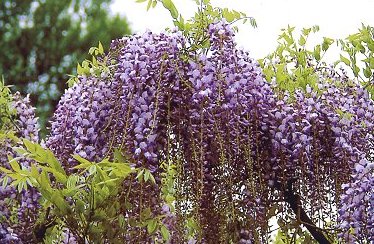
Native Wisteria 'Amethyst Falls'

I will admit, alongside the road, it is beautiful. I am just not in the mood for it to choke out any of my trees.....though, I really am not fond of those Crape Myrtles I have growing....hmmmmm.
Happy Growing!
Darren
Monday, April 12, 2010
Where did I leave those pruners?
I was scrambling around lately, trying to get some yard work done. I know I worked on it all day, but nothing seemed to get done. Let me know if this has ever happened to you.
I wanted to start by planting some more vegetable seeds. I brought my seeds out and set them on the table. I went to the Greenhouse to get some potting soil and containers. As I was walking by the onion bed, I noticed it needed to be weeded. I bent down to start weeding the bed, when I noticed some purple Basil sprouting up. My wife has been wanting some to put in salads and such, So I figured I would carefully dig it up and put it in a container. I headed over to the shed to get my little hand shovel. As I was heading over to the shed, I noticed a Holly bush that needed to be pruned. Well, as long as I was right there, I should go ahead and prune it. Where were my pruners? Oh yea, they were in the greenhouse. I proceeded to head for the Greenhouse to get them. Walking around the corner, the Tomatoes and Peppers needed to be watered. Wow, they look pretty bad, I better water right away. So, off to the faucet to turn on the water. You know, as long as the water is going to be on, I should go ahead and get those seeds planted. That way I can soak them real well and get them germinated. As I walking to the Greenhouse to plant the seeds, there was some aphids on the Citrus trees. I guess I should go get the insecticide to spray them before they cause much damage. I need water to make an insecticide solution, better go turn the water on after all.
The faucet is right by the two Okra containers. One container seems to be germinating well. The other, not so much. I probably need to reseed that one. Off to the table to get the seed box. Past the Camellia's. Look at all those petals on the ground, they need to be cleaned up so as to not spread any disease. Let me go get a bucket to put the petals in. Oh yea, I forgot about that Holly, better prune it while I am thinking about it. Where did I put those pruners?
I looked at my watch and it is almost dinner time. I wanted to get the yard mowed. No time now, it will be dark soon. Where did the day go?
For all of you that are laughing and shaking your head in confirmation, you know where I am coming from.
I think I suffer from GAD, Garden Attention Disorder. If anybody knows of a cure, please let me know.
Happy Growing!
Darren
I wanted to start by planting some more vegetable seeds. I brought my seeds out and set them on the table. I went to the Greenhouse to get some potting soil and containers. As I was walking by the onion bed, I noticed it needed to be weeded. I bent down to start weeding the bed, when I noticed some purple Basil sprouting up. My wife has been wanting some to put in salads and such, So I figured I would carefully dig it up and put it in a container. I headed over to the shed to get my little hand shovel. As I was heading over to the shed, I noticed a Holly bush that needed to be pruned. Well, as long as I was right there, I should go ahead and prune it. Where were my pruners? Oh yea, they were in the greenhouse. I proceeded to head for the Greenhouse to get them. Walking around the corner, the Tomatoes and Peppers needed to be watered. Wow, they look pretty bad, I better water right away. So, off to the faucet to turn on the water. You know, as long as the water is going to be on, I should go ahead and get those seeds planted. That way I can soak them real well and get them germinated. As I walking to the Greenhouse to plant the seeds, there was some aphids on the Citrus trees. I guess I should go get the insecticide to spray them before they cause much damage. I need water to make an insecticide solution, better go turn the water on after all.
The faucet is right by the two Okra containers. One container seems to be germinating well. The other, not so much. I probably need to reseed that one. Off to the table to get the seed box. Past the Camellia's. Look at all those petals on the ground, they need to be cleaned up so as to not spread any disease. Let me go get a bucket to put the petals in. Oh yea, I forgot about that Holly, better prune it while I am thinking about it. Where did I put those pruners?
I looked at my watch and it is almost dinner time. I wanted to get the yard mowed. No time now, it will be dark soon. Where did the day go?
For all of you that are laughing and shaking your head in confirmation, you know where I am coming from.
I think I suffer from GAD, Garden Attention Disorder. If anybody knows of a cure, please let me know.
Happy Growing!
Darren
Sunday, April 11, 2010
The Plant Swap Aftermath
I'm Back!! My apologies if you have been wondering where I have been. Work got very hairy for a couple of days, I had family in town and of course, The Plant Swap was held on April 10th.
I am very excited to announce that we did indeed pass all previous plant swap attendances. Final count was 75 people and at least 800 plants!! I really would like to THANK everybody that came. There was a lot of fun and plenty of food. I was going to take some pictures of the food table, I ended up so busy talking with people, I never did eat!
Here are some pictures from all the action.
 My mother and I planning the course of action.
 Me setting down some plants.
 Checking out the goodies
 More milling
 Just before the go signal
If you have never been to a plant swap, I strongly encourage you to go to one. It is a great place to meet new gardening friends, and get some really interesting plants. The amount of information floating around is also a huge bonus. If you don't know where one is close to you, I have you covered.
Check out some of the following websites.
http://www.plantswap.net/
This site has a bunch of places right on their homepage where one is being held.
http://forums.gardenweb.com/forums/exchind/
If you go to this site, you can check out each individual state and see if they are having one near you.
If there is none to be found, consider hosting one yourself. I wrote a past blog article pertaining to how to host one. The concept is very easy and it may sound like a lot of work, it is to some extent, but I promise it will be well worth the time. Just ask the 75 people that were at mine this past Saturday. I did not receive any complaints and received many Thank You's and pats on the back. Overall it was a very satisfying day!
Happy Growing!
Darren
I am very excited to announce that we did indeed pass all previous plant swap attendances. Final count was 75 people and at least 800 plants!! I really would like to THANK everybody that came. There was a lot of fun and plenty of food. I was going to take some pictures of the food table, I ended up so busy talking with people, I never did eat!
Here are some pictures from all the action.
 My mother and I planning the course of action.
 Me setting down some plants.
 Checking out the goodies
 More milling
 Just before the go signal
If you have never been to a plant swap, I strongly encourage you to go to one. It is a great place to meet new gardening friends, and get some really interesting plants. The amount of information floating around is also a huge bonus. If you don't know where one is close to you, I have you covered.
Check out some of the following websites.
http://www.plantswap.net/
This site has a bunch of places right on their homepage where one is being held.
http://forums.gardenweb.com/forums/exchind/
If you go to this site, you can check out each individual state and see if they are having one near you.
If there is none to be found, consider hosting one yourself. I wrote a past blog article pertaining to how to host one. The concept is very easy and it may sound like a lot of work, it is to some extent, but I promise it will be well worth the time. Just ask the 75 people that were at mine this past Saturday. I did not receive any complaints and received many Thank You's and pats on the back. Overall it was a very satisfying day!
Happy Growing!
Darren
Subscribe to:
Posts (Atom)