Showing posts with label Spider Mites. Show all posts

Sunday, May 22, 2011

They Mite..... If You Let Them!

This past week I did a program on growing fruit in the Lowcountry. I basically did a ten minute presentation, which was WAY too short to do anything of substance, then the other two on the panel did the same. After that it was almost an hour of "Stump the Chump" style questions. The one gentleman was a small fruit farmer from the Edisto area and the other was the host of the TV show "Making it Grow", Rowland Alston. I only bring that up because you would figure that he would get the majority of the questions, being a big star and all.....Nope, probably 70% of the questions were directed at me and Citrus.
There was one question however that the three of us kind of teamed up on, and that was about Spider Mites.
Spider mites belong to the family, Tetranychidae. They are classed as a type of arachnid, which are relatives of insects that also includes, spiders, ticks, and scorpions.
These microscopic creatures are pests to over 180 species of plants including many fruit trees, vines, berries, vegetables,and ornamental plants.
Spider mites are less than 1 millimeter in size and vary in color. They are difficult to see with the naked eye.
Under a very good microscope, they look like this:
Creepy little things, aren't they?
Spider Mites, as you can see, have a simple, oval‑shaped body and no wings or antennae. All species pass through an egg stage, a six‑legged larval stage, and two eight‑legged nymph stage before transforming into an eight‑legged adult. Immature stages resemble the adults except in size. They reproduce rapidly in hot weather and commonly become numerous in June through September. An adult female may live for several weeks and lay many dozens of eggs during her lifetime.
The damage they do is caused as they feed, bruising the cells with their small, whiplike mouthparts and ingesting the sap. Injury can lead to leaf loss and even plant death. Damaged areas typically appear marked with many small, light flecks, giving the plant a somewhat speckled appearance.
Photo courtesy of Clemson University

They can also cause a bronzing effect of the leaves,similar to this:

One last sign that you might have Spider Mites is the webbing on heavily infested plants:

If you are unsure whether you have Mites or not, there is an easy test. Place a white piece of paper or paper plate under your plant and give it a decent shake. If you see tiny little specks wandering around, you have them. The size of the Spider Mite "specks" on the paper is about the same size as the period at the end of this sentence.
How do you control them? Irrigation and moisture management can be important cultural controls for spider mites. Adequate irrigation is important because water stressed plants are most likely to be damaged. Keeping the plants in a high humidity environment encourages pathogenic fungi that attack the mites.
Various insects and predatory mites also feed on spider mites and can provide some level of natural control. One group of small, dark-colored lady beetles known as the "Spider Mite Destroyers" (Stethorus species) are specialized predators of Spider Mites.
Courtesy of UC Davis

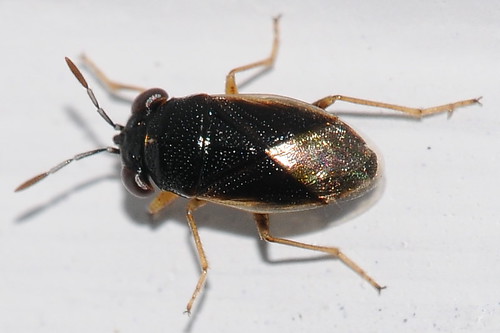
Then you have the Minute pirate bugs (family Anthocoridae)
Courtesy Bug Guide.net

Big-Eyed bugs (Geocoris species)


and Predatory Thrips
Courtesy Bug Guide.net

Which can all be important natural enemies.
Chemical control of spider mites generally involves pesticides that are specifically developed for spider mite control (miticides or acaricides). Few insecticides are effective for spider mites and many even aggravate problems because they kill the beneficial insects. Plus, most miticides do not affect eggs, so a repeat application approximately every 10 to 14 days is usually needed for control. Then to top it all off, spider mites can become resistant to certain pesticides.
Some control can be obtained with horticultural oils, like Neem oil, and insecticidal soaps. These materials have no residual activity and must come in direct contact with the mites. House plants can be tricky. There is no biological control. You can use the oils and soaps, but one easier method is to periodically hose small plants in the sink or shower.
Some of the mites that you may encounter are:
The Twospotted Spider Mite (Tetranychus urticae)
This is the most common and destructive mite on deciduous ornamentals. It has an extremely wide host range and will feed on many varieties of trees, shrubs, flowers, weeds, fruits, greenhouse and field crops. Immature mites and adults are yellowish to greenish with two dark spots on either side of the body.
European Red Mite (Panonychus ulmi)
This mite attacks deciduous trees and shrubs and is especially common on flowering fruit trees such as Apple and Crabapple, Cherry, Pear, Plum, Hawthorn, and Serviceberry.
Southern Red Mite (Oligonychus ilicis)
This is the most common and destructive spider mite on broad‑leaved evergreens, especially Japanese and American hollies, Azaleas, Viburnum, and Roses.
This is just a brief discussion of these pests, there are many more out there and much more that can be said about them. Your best defense is to just keep a good eye out. When scouting for Spider Mites, pay particular attention to plants having a history of mite problems. Spider Mites often re‑infest the same plants year after year. The good news, plants will often recover after the Mites have left as long as there was not too much damage....like death!
Happy Growing!
Darren

Sunday, March 14, 2010

Quit Bugging Me!!

     According to research, there are more than one million insect species that have been identified, and nearly 100,000 live in North America. Lucky us! I swear I have at least one of everything in my yard!! However, only a few damage landscape plants. The most common plant pests are aphids, mealybugs, scales, whiteflies, thrips, spider mites, and caterpillars. All of which I am sure you have dealt with at one time or another.

     Aphids, mealybugs, scales, and whiteflies have needle-like mouthparts to pierce plant tissues and feed on plant sap. Literally sucking the life out of your plant. It is common for foliage infested with these insects to be covered with black sooty mold. The reason for this is because they secrete a sugary product known as honeydew. Sooty mold indicates pests are present. Ants are also a good indicator of the presence of insects. They feed on honeydew, and often care for and protect the insects that produce it.
I did a lecture at the Carolina Yard Experience on Integrated Pest Management, also known as "The Good, The Bad, and The Ugly". The gist of my lecture was, Allow the beneficial insects to do their work. Ladybugs and lacewings are common predators that feed on piercing-sucking plant pests. If you don't use a lot of broad-based insecticides these GOOD insects will help control the other BAD insects.
I touched on a few bad insects there and I will do so here.

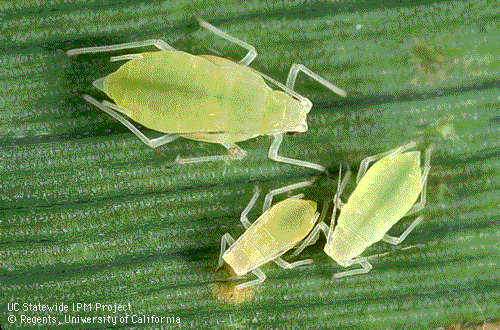
Aphids:

Courtesy of University of California

Aphids may be winged or wingless. They have pear-shaped bodies. They are usually green but may be yellow, black, red or other colors. Aphids attack succulent young leaves, and they typically congregate on the undersides of growth. You will know that you have an aphid problem when you see leaves becoming twisted or distorted, lots of ants and sooty mold. To help control them and give your good bugs a little help, Fertilize and water moderately to avoid excessive new growth. Flush aphids from branch tips with a garden hose. Insecticidal soaps do little damage to aphid enemies. A few aphids should be tolerated because they are a good food source for beneficial insects. Think of it as leaving a little snack for your friends.

Mealybugs:


Mealybugs are small insects that have soft bodies and well-developed legs. Their bodies are covered by a powdery, white, wax coating that may also surround their egg masses. They attack leaves, twigs, and roots. Mealies are usually pretty easy to spot, but if you see white waxy deposits, sooty mold on foliage, and lots of ants there is a good chance you have them. To control them, Horticultural oil and insecticidal soaps may be applied as a spray. Again, these will be less toxic to your beneficial friends. Control can be difficult, however, because mealybugs like to hide in tight, hard-to-reach places and protect themselves with wax deposits.

Whiteflies:


Adults appear as white specks on plants. They deposit lots of eggs on the underside of leaves. Stationary larvae are oval, flat, transparent to greenish in color when they are alive, and dull white when dead. You know you have Whitefly when you brush up against the plant and it looks like an upward bound snowstorm. The top sides of the leaves become pale or spotted. You have lots of Ants and sooty mold. Some whiteflies have developed tolerance to pesticides. Insecticidal soaps and horticultural oils are effective and of course, environmentally friendly. There is another environmentally safe way to control Whitefly, yellow boards smeared with oil will trap many of these insects.

Spider mites:


Spider Mites are tiny, have oval bodies and are about the size of this period. They may be red, yellow, greenish or spotted. Adults spin loose webs on foliage and reproduce rapidly in hot weather. The Injury they do looks like light-colored dots, which gives leaves a dull, gray-green, stippled appearance, fine, loose spider webs and ashy looking residues. You will need a magnifying glass to see these tiny little insects. These guys are difficult to get rid of because mites multiply quickly, they develop pesticide tolerance when the same product is used over and over again. Alternate horticultural oil with insecticidal soap. Use a garden hose to dislodge mites from plants. If you must use a chemical, make sure it is labeled for Spider Mites or arachnids.

As always, make sure you follow label directions!! I can not emphasize this enough, it is the law!
Hopefully, this will give you some idea of what to look for and what to do for them. I didn't get to lecture in front of very many people, but I sure talked to a
Happy Growing!
Darren