I have mentioned all the rain we have had in the past few weeks here in Charleston. It has finally let up enough that I could really get out there and get some work done. I went to the back where all my Citrus are located, what I found was a little disturbing. It looks as if my Citrus have been fighting fires for the past week! They are covered in soot. I am pretty sure there have been no fires close to the plants and I know they quit smoking sometime last year. SO........
All kidding aside, they are covered in soot, but it has nothing to do with anything combustible. It is actually a sooty mold.
Sooty molds are dark fungi that grow on honeydew excreted by sucking insects, like Aphids, Mealybugs and Whiteflies. The latter being my problem. I thought I had gotten rid of the little white flying pains in the butt.
Sooty molds occur in all parts of North America. Capnodium citri is associated with Whiteflies and scale pests on citrus. There are other species of the mold that are associated with other pests on other plants. Basically they are all the same.
Honeydew is a sweet, clear, sticky substance secreted by the insects such as the Whiteflies. The honeydew drops from the insects to the leaves and twigs. Wind-blown sooty mold spores that stick to the honeydew then have a suitable medium for growth. Kind of like that jelly like stuff you played with in high school biology class. When the spores germinate, they send out black fungal strands that cover the plant tissue and cause the discoloration.
Although sooty molds do not infect plants, they can indirectly damage the plant by coating the leaves to the point that sunlight penetration is reduced or inhibited. Without adequate sunlight, the plant’s ability to carry on photosynthesis is reduced, which may stunt plant growth. When it can't produce food, it starves. Coated leaves may also prematurely die, causing leaf drop. Most plants will tolerate a small amount of coverage. Fruits or vegetables covered with sooty molds are edible. Simply remove the mold with a solution of mild soap and warm water. The mold itself can also be sprayed away or rubbed off with your finger.
As seen in these pictures:
Treating sooty mold is best done by treating the source of the problem first. Get rid of the sap sucking pests. If you don't, the mold will return. Luckily, there is a cure that will kill two pests with one spray. Horticultural oils. If one of the horticultural oils is used for control, it also has the advantage of helping to loosen the molds from the plant surface. This hastens the weathering away of the sooty molds. However, it may still linger on your plants for months, even after the pests have been eradicated. Horticultural oils are available at most garden centers and big box stores. There is one problem though, it can not be used in intense heat. The oil will basically do what oils do to food, cook it! Cooler weather, overcast days, or in the evening are the best times. PLEASE, make sure you follow the label directions!
Just as a side note, plants are not the only thing affected by sooty mold. If an object is under a tree or plant that has sap sucking insects present, it can be covered in the soot.
Just remember, rid yourself of the insects first, then you can clean your object.
I got lucky, it was a cloudy, cooler weekend, so I sprayed my trees with Neem oil.
Sooty mold is not as bad as it looks, it can be a major problem, but with a little work, your plant will be fine......unless they take up smoking again!!
Happy Growing!
Darren
Showing posts with label Whitefly. Show all posts
Sunday, August 29, 2010
Saturday, April 24, 2010
The First Invader has Arrived
Every year it is a guessing game as to which invading pest will be the first to arrive in my yard. Some years it is Aphids, others Mealybugs....This year it's Whitefly.
There seems to be many more than I have ever seen before. They are all over the Citrus, Tomatoes, Potatoes and Peppers. I have the typical white cloud of fluttering insects when I water.
Whiteflies are not true flies as they are relatives of mealybugs, scales and aphids. All of these insects suck the life right out of your plant, literally. They are piercing insects that suck the juice from the plants tissue. They attack the leaves, buds and stems.
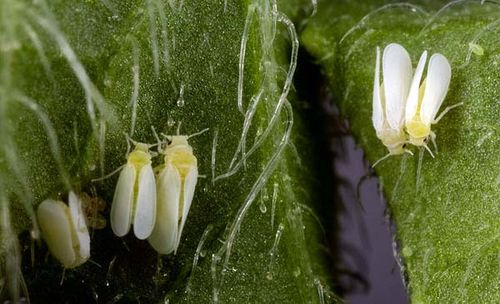
Adult Whiteflies are about 1/10 to 1/16 inch long and look like tiny moths.

Adult females usually lay between 200 and 400 eggs. Sometimes the eggs are deposited in a circular pattern in groups of 30 to 40 because the female will often keep her mouthparts in the plant to feed while moving her abdomen in a circle. How is THAT for lazy?!
Within about a week, the eggs hatch into flattened nymphs, called crawlers, that wander about the plant. Very soon after that, the crawlers insert their mouthparts and begin to feed. If your infestation is bad enough, you can literally have all generations present at the same time. Adults to eggs and all points in between.
It is the nymph and adult fly that cause the physical damage to the host plants. The plants can be seriously weakened and grow poorly, becoming stunted. Leaves often turn yellow, appear dry and drop prematurely, ultimately the plant can die. If this isn't bad enough, Whiteflies produce honeydew (like aphids) that can drip onto the plant encouraging the growth of sooty mold. They also can spread plant viruses. I am really NOT a fan of Whitefly.
The Silverleaf Whitefly has over 500 host plants, this is the one that has come to visit me. Many other Whitefly are more plant specific. Luckily, there are a number of natural predators. The Ladybug larvae will consume up to 1000 Whitefly eggs in its lifetime, and they also feeds on the nymphs. Green Lacewing, which is probably the most voracious, effective predator, eats them. Online, you can order the Delphastus beetle, a specific predator of Whiteflies. It has to eat them in order to reproduce. Other natural enemies are Minute Pirate Bugs, Big Eyed Bugs, and Damsel Bugs. There are also many songbirds, including swallows, that feed on Whitefly.
Some things that you can do to help your natural predators include: Use a seaweed spray to mist the leaves of your plants. Along with all the benefits plants derive from a seaweed spray it also seems to make the foliage undesirable for Whiteflies to reproduce on. Insecticidal soap is another alternative. White flies being soft-bodied insects can be successfully controlled and prevented with insect soap sprays. It basically dries them out. You can plant Marigolds around your prize plants, this may help some. I have not had much luck myself with this method, they still seem to show up. A light horticultural oil will work.There is one other safe control to try, this one really tickled me when I read about it. Use a vacuum to carefully suck up as many Whiteflies as you can. Dustbuster units are ideal for this. As a last resort, you can use Pyrethrum or Malathion sprays. The key to using these products is to directly spray the pests. Their location on the underside of the leaf makes it difficult to deliver insecticides to the site where they are found. Also, Whiteflies can rapidly develop resistance to the insecticides used against them. Always read and follow the label directions carefully.
Hopefully, you won't have to deal with this menace. At least if you do, you know how to handle them now. As for me, I am going to give Mother Nature a couple of days to take care of my little problem. If she fails, I have no problem bringing out the big guns.....Now what was the code for that nuke!?
Happy Growing!
Darren
There seems to be many more than I have ever seen before. They are all over the Citrus, Tomatoes, Potatoes and Peppers. I have the typical white cloud of fluttering insects when I water.
Whiteflies are not true flies as they are relatives of mealybugs, scales and aphids. All of these insects suck the life right out of your plant, literally. They are piercing insects that suck the juice from the plants tissue. They attack the leaves, buds and stems.
Adult Whiteflies are about 1/10 to 1/16 inch long and look like tiny moths.
Adult females usually lay between 200 and 400 eggs. Sometimes the eggs are deposited in a circular pattern in groups of 30 to 40 because the female will often keep her mouthparts in the plant to feed while moving her abdomen in a circle. How is THAT for lazy?!
Within about a week, the eggs hatch into flattened nymphs, called crawlers, that wander about the plant. Very soon after that, the crawlers insert their mouthparts and begin to feed. If your infestation is bad enough, you can literally have all generations present at the same time. Adults to eggs and all points in between.
It is the nymph and adult fly that cause the physical damage to the host plants. The plants can be seriously weakened and grow poorly, becoming stunted. Leaves often turn yellow, appear dry and drop prematurely, ultimately the plant can die. If this isn't bad enough, Whiteflies produce honeydew (like aphids) that can drip onto the plant encouraging the growth of sooty mold. They also can spread plant viruses. I am really NOT a fan of Whitefly.
The Silverleaf Whitefly has over 500 host plants, this is the one that has come to visit me. Many other Whitefly are more plant specific. Luckily, there are a number of natural predators. The Ladybug larvae will consume up to 1000 Whitefly eggs in its lifetime, and they also feeds on the nymphs. Green Lacewing, which is probably the most voracious, effective predator, eats them. Online, you can order the Delphastus beetle, a specific predator of Whiteflies. It has to eat them in order to reproduce. Other natural enemies are Minute Pirate Bugs, Big Eyed Bugs, and Damsel Bugs. There are also many songbirds, including swallows, that feed on Whitefly.
Some things that you can do to help your natural predators include: Use a seaweed spray to mist the leaves of your plants. Along with all the benefits plants derive from a seaweed spray it also seems to make the foliage undesirable for Whiteflies to reproduce on. Insecticidal soap is another alternative. White flies being soft-bodied insects can be successfully controlled and prevented with insect soap sprays. It basically dries them out. You can plant Marigolds around your prize plants, this may help some. I have not had much luck myself with this method, they still seem to show up. A light horticultural oil will work.There is one other safe control to try, this one really tickled me when I read about it. Use a vacuum to carefully suck up as many Whiteflies as you can. Dustbuster units are ideal for this. As a last resort, you can use Pyrethrum or Malathion sprays. The key to using these products is to directly spray the pests. Their location on the underside of the leaf makes it difficult to deliver insecticides to the site where they are found. Also, Whiteflies can rapidly develop resistance to the insecticides used against them. Always read and follow the label directions carefully.
Hopefully, you won't have to deal with this menace. At least if you do, you know how to handle them now. As for me, I am going to give Mother Nature a couple of days to take care of my little problem. If she fails, I have no problem bringing out the big guns.....Now what was the code for that nuke!?
Happy Growing!
Darren
Sunday, March 14, 2010
Quit Bugging Me!!
According to research, there are more than one million insect species that have been identified, and nearly 100,000 live in North America. Lucky us! I swear I have at least one of everything in my yard!! However, only a few damage landscape plants. The most common plant pests are aphids, mealybugs, scales, whiteflies, thrips, spider mites, and caterpillars. All of which I am sure you have dealt with at one time or another.
Aphids, mealybugs, scales, and whiteflies have needle-like mouthparts to pierce plant tissues and feed on plant sap. Literally sucking the life out of your plant. It is common for foliage infested with these insects to be covered with black sooty mold. The reason for this is because they secrete a sugary product known as honeydew. Sooty mold indicates pests are present. Ants are also a good indicator of the presence of insects. They feed on honeydew, and often care for and protect the insects that produce it.
I did a lecture at the Carolina Yard Experience on Integrated Pest Management, also known as "The Good, The Bad, and The Ugly". The gist of my lecture was, Allow the beneficial insects to do their work. Ladybugs and lacewings are common predators that feed on piercing-sucking plant pests. If you don't use a lot of broad-based insecticides these GOOD insects will help control the other BAD insects.
I touched on a few bad insects there and I will do so here.
Aphids:
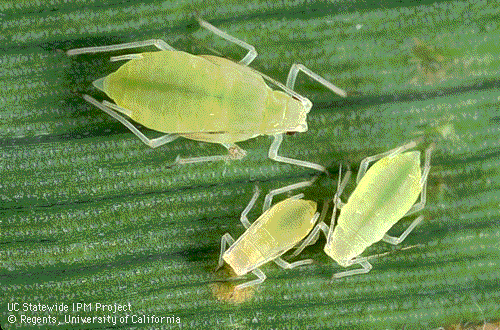
Courtesy of University of California
Aphids may be winged or wingless. They have pear-shaped bodies. They are usually green but may be yellow, black, red or other colors. Aphids attack succulent young leaves, and they typically congregate on the undersides of growth. You will know that you have an aphid problem when you see leaves becoming twisted or distorted, lots of ants and sooty mold. To help control them and give your good bugs a little help, Fertilize and water moderately to avoid excessive new growth. Flush aphids from branch tips with a garden hose. Insecticidal soaps do little damage to aphid enemies. A few aphids should be tolerated because they are a good food source for beneficial insects. Think of it as leaving a little snack for your friends.
Mealybugs:
Mealybugs are small insects that have soft bodies and well-developed legs. Their bodies are covered by a powdery, white, wax coating that may also surround their egg masses. They attack leaves, twigs, and roots. Mealies are usually pretty easy to spot, but if you see white waxy deposits, sooty mold on foliage, and lots of ants there is a good chance you have them. To control them, Horticultural oil and insecticidal soaps may be applied as a spray. Again, these will be less toxic to your beneficial friends. Control can be difficult, however, because mealybugs like to hide in tight, hard-to-reach places and protect themselves with wax deposits.
Whiteflies:

Adults appear as white specks on plants. They deposit lots of eggs on the underside of leaves. Stationary larvae are oval, flat, transparent to greenish in color when they are alive, and dull white when dead. You know you have Whitefly when you brush up against the plant and it looks like an upward bound snowstorm. The top sides of the leaves become pale or spotted. You have lots of Ants and sooty mold. Some whiteflies have developed tolerance to pesticides. Insecticidal soaps and horticultural oils are effective and of course, environmentally friendly. There is another environmentally safe way to control Whitefly, yellow boards smeared with oil will trap many of these insects.
Spider mites:
Spider Mites are tiny, have oval bodies and are about the size of this period. They may be red, yellow, greenish or spotted. Adults spin loose webs on foliage and reproduce rapidly in hot weather. The Injury they do looks like light-colored dots, which gives leaves a dull, gray-green, stippled appearance, fine, loose spider webs and ashy looking residues. You will need a magnifying glass to see these tiny little insects. These guys are difficult to get rid of because mites multiply quickly, they develop pesticide tolerance when the same product is used over and over again. Alternate horticultural oil with insecticidal soap. Use a garden hose to dislodge mites from plants. If you must use a chemical, make sure it is labeled for Spider Mites or arachnids.
As always, make sure you follow label directions!! I can not emphasize this enough, it is the law!
Hopefully, this will give you some idea of what to look for and what to do for them. I didn't get to lecture in front of very many people, but I sure talked to a
Happy Growing!
Darren
Aphids, mealybugs, scales, and whiteflies have needle-like mouthparts to pierce plant tissues and feed on plant sap. Literally sucking the life out of your plant. It is common for foliage infested with these insects to be covered with black sooty mold. The reason for this is because they secrete a sugary product known as honeydew. Sooty mold indicates pests are present. Ants are also a good indicator of the presence of insects. They feed on honeydew, and often care for and protect the insects that produce it.
I did a lecture at the Carolina Yard Experience on Integrated Pest Management, also known as "The Good, The Bad, and The Ugly". The gist of my lecture was, Allow the beneficial insects to do their work. Ladybugs and lacewings are common predators that feed on piercing-sucking plant pests. If you don't use a lot of broad-based insecticides these GOOD insects will help control the other BAD insects.
I touched on a few bad insects there and I will do so here.
Aphids:
Aphids may be winged or wingless. They have pear-shaped bodies. They are usually green but may be yellow, black, red or other colors. Aphids attack succulent young leaves, and they typically congregate on the undersides of growth. You will know that you have an aphid problem when you see leaves becoming twisted or distorted, lots of ants and sooty mold. To help control them and give your good bugs a little help, Fertilize and water moderately to avoid excessive new growth. Flush aphids from branch tips with a garden hose. Insecticidal soaps do little damage to aphid enemies. A few aphids should be tolerated because they are a good food source for beneficial insects. Think of it as leaving a little snack for your friends.
Mealybugs:
Mealybugs are small insects that have soft bodies and well-developed legs. Their bodies are covered by a powdery, white, wax coating that may also surround their egg masses. They attack leaves, twigs, and roots. Mealies are usually pretty easy to spot, but if you see white waxy deposits, sooty mold on foliage, and lots of ants there is a good chance you have them. To control them, Horticultural oil and insecticidal soaps may be applied as a spray. Again, these will be less toxic to your beneficial friends. Control can be difficult, however, because mealybugs like to hide in tight, hard-to-reach places and protect themselves with wax deposits.
Whiteflies:
Adults appear as white specks on plants. They deposit lots of eggs on the underside of leaves. Stationary larvae are oval, flat, transparent to greenish in color when they are alive, and dull white when dead. You know you have Whitefly when you brush up against the plant and it looks like an upward bound snowstorm. The top sides of the leaves become pale or spotted. You have lots of Ants and sooty mold. Some whiteflies have developed tolerance to pesticides. Insecticidal soaps and horticultural oils are effective and of course, environmentally friendly. There is another environmentally safe way to control Whitefly, yellow boards smeared with oil will trap many of these insects.
Spider mites:
Spider Mites are tiny, have oval bodies and are about the size of this period. They may be red, yellow, greenish or spotted. Adults spin loose webs on foliage and reproduce rapidly in hot weather. The Injury they do looks like light-colored dots, which gives leaves a dull, gray-green, stippled appearance, fine, loose spider webs and ashy looking residues. You will need a magnifying glass to see these tiny little insects. These guys are difficult to get rid of because mites multiply quickly, they develop pesticide tolerance when the same product is used over and over again. Alternate horticultural oil with insecticidal soap. Use a garden hose to dislodge mites from plants. If you must use a chemical, make sure it is labeled for Spider Mites or arachnids.
As always, make sure you follow label directions!! I can not emphasize this enough, it is the law!
Hopefully, this will give you some idea of what to look for and what to do for them. I didn't get to lecture in front of very many people, but I sure talked to a
Happy Growing!
Darren
Subscribe to:
Posts (Atom)